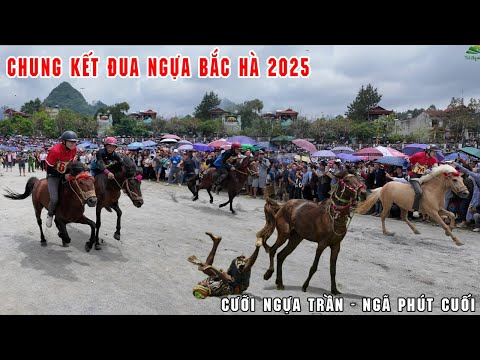
Bac Ha Horse Racing Festival
Thunder rolls across the emerald valleys of Lao Cai as hundreds of hooves pound the mountain earth. Flower Hmong riders in brilliant indigo and crimson lean forward on their steeds, their silver jewelry catching the highland sun. The crowd roars in Hmong, Vietnamese, and a dozen other tongues as horses and riders become one with the ancient rhythms of the northern mountains.
The Bac Ha Horse Racing Festival stands as one of Vietnam's most spectacular highland celebrations, where the proud equestrian traditions of the Flower Hmong people burst into vivid life each year. Held in the misty mountains of Lao Cai Province, this centuries-old festival transforms the remote valleys into an arena of cultural pride, where racing prowess determines not just victory, but social standing and matrimonial prospects in the tight-knit mountain communities.
Galloping Through Centuries of Mountain Tradition
The origins of Bac Ha's horse racing tradition stretch back over 400 years, born from the practical needs of mountain life and the warrior spirit of the Hmong people. In the harsh terrain of northern Vietnam's borderlands, horses weren't mere animals—they were lifelines, carrying families across treacherous mountain passes, hauling goods to distant markets, and serving as symbols of wealth and status.
Legend speaks of a Hmong chieftain who organized the first races to select the finest horsemen for his guard, but the festival's deeper roots lie in the sính tử (courtship) traditions of the Flower Hmong. Young men would demonstrate their riding skills to impress potential brides and their families, turning athletic prowess into romantic opportunity. Over generations, these informal competitions evolved into the grand spectacle that draws thousands to the mountains each year.
The French colonial period briefly threatened to suppress the festival, viewing large gatherings of ethnic minorities with suspicion. However, the races survived in smaller, more secretive forms, kept alive by the mountain communities' fierce dedication to their cultural identity. Following Vietnam's independence, the festival was officially recognized and has since grown into a celebration that honors both tradition and the region's remarkable cultural diversity.
The Thunder and Poetry of Highland Racing
The heart of the Bac Ha Horse Racing Festival lies in its breathtaking displays of horsemanship, where riders and their mounts navigate courses that would challenge even modern equestrians. The races unfold across multiple categories, each demanding different skills and showcasing various aspects of traditional mountain riding.
The Magnificent Steeds and Their Riders
The horses of Bac Ha are typically small but incredibly hardy thác bạc (silver waterfall) horses, a local breed adapted to the region's steep terrain and thin mountain air. These compact animals, standing barely 13 hands high, possess remarkable endurance and sure-footedness that allows them to navigate the challenging racecourses with grace.
Riders, predominantly young Flower Hmong men, prepare for months before the festival. Their preparation involves:
- Daily training rides through mountain trails to build stamina and coordination
- Traditional grooming rituals for their horses using local herbs and mountain spring water
- Ceremonial preparations including blessing ceremonies conducted by village shamans
- Costume preparation featuring elaborate traditional dress that must remain pristine throughout the race
The Spectacle of Competition
The racing events themselves unfold in a carefully orchestrated sequence that builds excitement throughout the festival day. The chạy ngựa (horse racing) begins with shorter sprints before culminating in the grand endurance races that can stretch for several kilometers across the valley floor.
Riders wear their finest traditional attire—vibrant indigo jackets adorned with intricate embroidery, silver neck rings that catch the sunlight, and distinctive black turbans that stream behind them as they race. The visual impact is stunning: dozens of brilliantly dressed horsemen thundering across the green mountain landscape, their mounts' hooves creating rhythmic percussion that echoes off the surrounding peaks.
The courses themselves are marvels of mountain engineering, incorporating natural obstacles like streams, rocky outcroppings, and steep inclines that test both horse and rider. Victory requires not just speed, but the deep partnership between human and animal that defines traditional Hmong horsemanship.
Sacred Bonds Between Earth, Spirit, and Community
Beyond the excitement of competition, the Bac Ha Horse Racing Festival serves profound spiritual and social functions within Flower Hmong society. The event represents a lễ hội tâm linh (spiritual festival) that strengthens connections between the living community, ancestral spirits, and the natural world.
For the Flower Hmong, horses are believed to possess spiritual qualities that connect the earthly realm with the world of ancestors. Before each race, shamans perform blessing ceremonies that invoke protection for riders and their mounts, burning incense and offering prayers to ensure safe passage and favorable outcomes. These rituals acknowledge that the races are not merely athletic competitions, but sacred events that honor the relationship between humans, animals, and the mountain spirits.
The festival also serves crucial social functions, particularly in the realm of courtship and marriage. Young women attend wearing their most elaborate traditional costumes—stunning outfits that may represent months of handiwork and significant family investment. The sính tử tradition allows young people to meet across village boundaries, with successful riders often gaining enhanced marriage prospects and social status.
Community bonding extends beyond romance to encompass trade, politics, and cultural exchange. The festival provides opportunities for different ethnic groups—Hmong, Tay, Nung, and others—to interact peacefully, sharing traditions and conducting business in an atmosphere of celebration rather than competition.
Journey to the Heart of Highland Celebration
When the Mountains Come Alive
The Bac Ha Horse Racing Festival typically takes place during the Tết Âm lịch (Lunar New Year) period, usually falling between late January and early February. The exact dates vary each year according to the lunar calendar, with the main racing events concentrated on specific days that hold cultural significance for the Flower Hmong community.
Planning your visit requires attention to weather conditions, as the northern mountains can be quite cold during festival season. Morning temperatures often hover near freezing, though afternoons warm considerably under the highland sun.
Reaching the Remote Arena
Bac Ha town serves as the primary base for festival visitors, located approximately 70 kilometers northeast of Sapa and accessible via winding mountain roads that offer spectacular scenery. The journey from Hanoi takes roughly 6-7 hours by road, with most visitors choosing to stay in Sapa and make day trips to the festival grounds.
Local transportation options include:
- Motorbike rentals for adventurous travelers comfortable with mountain roads
- Organized tour groups departing from Sapa and Hanoi
- Local buses running between major towns, though schedules can be irregular
- Private car hire offering the most flexibility and comfort
Experiencing the Festival
The racing grounds transform into a vibrant cultural marketplace where the competition represents just one facet of a broader celebration. Visitors can explore traditional craft stalls, sample local delicacies like thắng cố (a traditional Hmong soup), and witness traditional music and dance performances that complement the main racing events.
Photography enthusiasts should arrive early to capture the pre-race preparations, when riders groom their horses and don their ceremonial attire. The interplay of morning mist, colorful costumes, and mountain landscapes creates unforgettable images that encapsulate the festival's magical atmosphere.
Respectful observation is essential—this remains a genuine cultural celebration rather than a tourist performance. Visitors should dress warmly, bring cash for local purchases, and approach the event with appreciation for its deep cultural significance to the mountain communities who have preserved this extraordinary tradition across centuries of change.
Featured Video
Trận Chung Kết Kịch Tính - Lễ Hội Đua Ngựa Bắc Hà 2025 - Con Ngựa Chiến Thắng Nhưng Chủ Lại Quá Buồn
Heritage Details
Official Recognition Information
- Official Name (Vietnamese)
- Lễ hội đua ngựa Bắc Hà
- Description
- The Bac Ha Horse Racing Festival in northern Vietnam is a vibrant celebration of the region's rich equestrian heritage, showcasing the skill and speed of local horse breeds and immersing visitors in a captivating display of traditional Vietnamese culture.