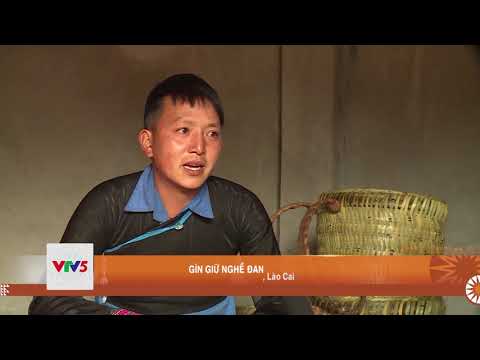
The Ancient Art of Xtieng Basket Weaving
In the misty highlands of southern Vietnam, where ancient forests whisper secrets to those who listen, weathered hands dance through strips of bamboo and rattan. Each twist and turn carries the weight of generations, each pattern tells a story older than memory itself.
Deep within the mountainous regions of Đồng Nai and Bình Phước provinces, the Xtieng people have preserved one of Vietnam's most remarkable traditional crafts: the intricate art of basket weaving. This ancient practice, passed down through countless generations, represents far more than mere functional craftsmanship—it embodies the soul of a people intimately connected to their forest homeland and serves as a living testament to their enduring cultural identity.
Roots in the Sacred Forest
The origins of Xtieng basket weaving stretch back over a millennium, intertwining with the very foundation of Xtieng civilization. According to tribal elders, the craft emerged from necessity when their ancestors first settled in the dense forests of the Đông Nam Bộ region. Unlike the lowland Vietnamese who developed pottery and metalwork, the Xtieng people turned to the abundant natural resources surrounding them—bamboo, rattan, and various forest vines—to create vessels for their daily needs.
Legend speaks of Bok Klei, a mythical figure who taught the first Xtieng people to read the language of the forest. She showed them which bamboo shoots would yield the most flexible strips, when the moon's phase would make rattan most pliable, and how to honor the spirits of the trees before harvesting their gifts. This spiritual dimension transformed simple basketry into a sacred dialogue between human creativity and natural abundance.
During the expansion of various Vietnamese dynasties, while many highland communities saw their traditions threatened, the Xtieng's remote mountain villages provided a natural sanctuary for their cultural practices. The French colonial period and subsequent conflicts brought challenges, yet the essential knowledge of basket weaving survived, carefully guarded by village elders and master craftspeople known as thầy đan.
The Dance of Bamboo and Rattan
The creation of a traditional Xtieng basket is a meditation in motion, requiring not just technical skill but deep understanding of natural materials and their seasonal rhythms. Master weavers begin their work before dawn, when the forest air is cool and their hands are steady.
The process begins with the sacred act of chọn tre (bamboo selection). Experienced craftspeople can determine a bamboo's suitability by the sound it makes when tapped, the color of its nodes, and even its scent. The chosen bamboo undergoes a ritual preparation:
- Splitting: Using razor-sharp knives passed down through families, artisans split bamboo culms into thin, uniform strips
- Scraping: Each strip is carefully scraped to achieve the perfect thickness and flexibility
- Soaking: Strips are soaked in mountain stream water, sometimes for days, to achieve optimal pliability
- Sorting: Materials are sorted by color, thickness, and intended use
The weaving itself follows patterns with names that echo the natural world: "mắt cá" (fish eye), "vảy rồng" (dragon scale), and "lá chuối" (banana leaf). Each pattern requires specific hand movements passed down through generations. The most prized baskets incorporate song tre (twin bamboo) weaving, where two strips move as one, creating patterns of extraordinary complexity and beauty.
Rattan, known locally as mây, provides the structural foundation for larger baskets. Its preparation requires even greater skill, as craftspeople must steam and bend it while preserving its strength. The integration of bamboo and rattan in a single piece represents the pinnacle of Xtieng weaving mastery.
Vessels of Spirit and Community
For the Xtieng people, baskets transcend their practical functions to become repositories of cultural meaning and spiritual significance. Each type of basket serves specific ceremonial and daily purposes, connecting the community to their ancestors and the natural world.
The giỏ cúng (offering basket) holds particular reverence, used exclusively for carrying rice wine and betel leaves to forest altars during lễ cúng rừng (forest worship ceremonies). These baskets feature intricate patterns believed to please the forest spirits and ensure successful harvests. The weaving of a giỏ cúng requires ritual purification and can only be undertaken by master craftspeople who have received spiritual blessing from village elders.
Marriage ceremonies feature special giỏ cưới (wedding baskets), woven by the bride's family as symbols of prosperity and fertility. The complexity of these baskets' patterns reflects the family's wishes for the couple's future, with certain motifs representing children, abundance, and harmony.
In daily life, different baskets serve distinct functions: the giỏ lúa for carrying rice from the fields, the giỏ cá designed specifically for transporting fish from mountain streams, and the giỏ thuốc used by traditional healers to gather medicinal plants. Each design reflects generations of practical wisdom about weight distribution, ventilation, and durability.
The communal aspect of basket weaving strengthens social bonds within Xtieng villages. Young people learn by observing and gradually participating in weaving circles, where stories are shared, marriages arranged, and cultural knowledge transmitted. These gatherings, known as họp đan, continue to serve as vital community institutions.
Experiencing the Living Tradition
Visitors seeking to witness this extraordinary craft have several opportunities to engage with authentic Xtieng basket weaving traditions, though access requires respectful approach and cultural sensitivity.
Đồng Nai Province Villages
The villages of Tân Phú and Định Quán districts offer the most accessible experiences. Several communities have established cultural tourism programs that allow visitors to observe master weavers at work and participate in basic weaving workshops. The Bù Gia Mập area, in particular, maintains strong weaving traditions, with families specializing in different basket types.
Visitors should arrange visits through local cultural centers or provincial tourism offices, as many villages prefer advance notice to prepare appropriate welcome ceremonies. The best time to visit is during the dry season (November to April) when materials are being prepared and major weaving projects undertaken.
Bình Phước Cultural Centers
The Bình Phước Museum of Ethnology in Đồng Xoài city houses an impressive collection of historical Xtieng baskets and regularly hosts demonstrations by master craftspeople. The museum also offers weekend workshops where visitors can learn basic techniques under expert guidance.
Practical Considerations
When visiting Xtieng weaving communities, travelers should:
- Dress modestly and remove shoes when entering homes
- Bring small gifts such as tea or fruit as tokens of respect
- Ask permission before photographing craftspeople at work
- Purchase baskets directly from artisans to support the tradition
- Allow time for the full experience—rushing contradicts the meditative nature of the craft
The most profound experiences occur during mùa đan (weaving season) from December to March, when entire villages focus on creating baskets for the coming year's ceremonies and daily use. During this period, the air fills with the gentle sounds of splitting bamboo and the quiet conversations of weaving circles, offering visitors a glimpse into a way of life that has remained essentially unchanged for centuries.
The Xtieng basket weaving tradition stands as a testament to the enduring power of cultural heritage to adapt and survive. In each carefully woven pattern lies the wisdom of the forest, the skill of countless generations, and the unbreakable bond between a people and their ancestral homeland.
Featured Video
GÌN GIỮ NGHỀ ĐAN GÙI Ở BẢN MÔNG | VTV5
Heritage Details
Official Recognition Information
- Official Name (Vietnamese)
- Nghề đan gùi của người Xtiêng
- Description
- The Xtieng basket weaving craft, a cherished Vietnamese national heritage rooted in the central highlands, showcases the intricate artistry and resilient cultural traditions of this indigenous community.