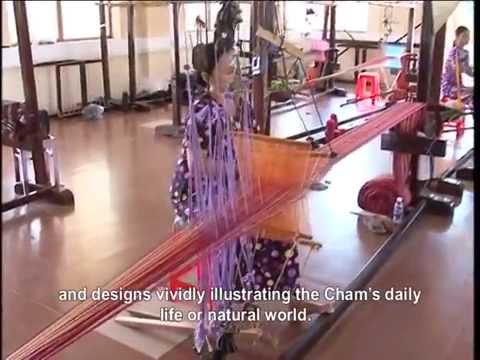
Brocade Weaving Craft of the Cham
In the quiet corners of traditional Cham villages, the rhythmic dance of wooden shuttles creates a symphony that has echoed for over a millennium. Golden threads catch the morning light as skilled hands guide ancient patterns into life, each motif carrying whispers of kingdoms past and the enduring spirit of a proud people.
The brocade weaving craft of the Cham represents one of Southeast Asia's most sophisticated textile traditions, where master weavers transform silk and cotton into intricate tapestries that serve as both artistic masterpieces and sacred cultural vessels. This ancient craft, practiced primarily by Cham women in Vietnam's central and southern regions, stands as a living testament to the artistic brilliance of the former Champa Kingdom.
Threads of the Ancient Champa Kingdom
The origins of Cham brocade weaving stretch back to the 7th century, when the mighty Champa Kingdom flourished along Vietnam's central coast. Born from the confluence of indigenous Austronesian traditions and influences from Indian Hindu culture, this craft emerged as the kingdom's textile crown jewel.
Legend speaks of Princess Po Nagar, the revered Cham goddess, who blessed the first weavers with divine inspiration to create fabrics worthy of temples and royalty. Historical records from the 10th century describe Cham textiles as prized commodities in regional trade networks, with merchants carrying these precious fabrics to courts across Southeast Asia and beyond.
The craft reached its golden age during the 15th and 16th centuries, when Cham artisans developed the sophisticated techniques that define authentic thổ cẩm (traditional brocade) today. Even as the Champa Kingdom faced political upheavals, the weaving tradition persevered, passed down through generations of women who served as both artists and cultural guardians.
The Sacred Art of Pattern and Purpose
At the heart of Cham brocade weaving lies the ghe bông - the traditional backstrap loom that transforms simple threads into complex narratives. The process begins before dawn, when weavers gather their materials and settle into the meditative rhythm that will guide their day.
The foundation starts with preparing the warp, where hundreds of silk or cotton threads are meticulously arranged according to patterns that exist only in the weaver's memory. Master weavers, known as po ghe, possess encyclopedic knowledge of over 200 traditional motifs, each carrying specific cultural meanings:
- Areca flower (bông pla): Symbolizing prosperity and fertility
- Diamond pattern (rồm): Representing the cosmic order
- Wave motifs (chăm pa): Connecting to the sea-faring heritage
- Geometric spirals: Embodying the cycle of life and rebirth
The weaving process itself requires extraordinary skill and patience. Using the supplementary weft technique, artisans introduce colored threads to create raised patterns that seem to float above the base fabric. A single sarong or ceremonial cloth can take anywhere from three weeks to several months to complete, with the most intricate pieces reserved for religious ceremonies and royal occasions.
The color palette follows ancient formulas, with natural dyes extracted from local plants, minerals, and insects. Deep indigo from the chàm plant, brilliant reds from lac insects, and golden yellows from nghệ (turmeric) create the signature combinations that make Cham textiles instantly recognizable.
Weaving the Sacred into Daily Life
Beyond their undeniable beauty, Cham brocades serve as spiritual bridges connecting the earthly and divine realms. In Cham cosmology, textiles possess protective powers, with specific patterns believed to ward off evil spirits and bring blessings to their wearers.
During the Kate Festival - the most important Cham religious celebration - the community adorns temples and participants in the finest brocades. The po ghe hold places of honor, as their creations transform ordinary spaces into sacred environments worthy of ancestral spirits and deities.
The craft also strengthens community bonds through the tradition of collective weaving, where experienced artisans mentor younger generations. These intimate gatherings serve as informal schools where cultural knowledge, family histories, and weaving techniques pass from mother to daughter, ensuring the tradition's continuity.
For Cham families, possessing ancestral textiles represents both material wealth and spiritual inheritance. Heirloom pieces, some dating back centuries, are treasured family assets that connect present generations to their illustrious past while serving as dowry items and ceremonial regalia.
Discovering the Living Tradition
Ninh Thuận Province: The Weaving Heartland
The villages surrounding Phan Rang-Tháp Chàm offer the most authentic encounters with Cham brocade weaving. Palei Chăm village, home to several master weavers, welcomes visitors who wish to observe the craft in its traditional setting. Here, the Po Nagar Temple complex provides cultural context, while nearby workshops demonstrate both ancient techniques and contemporary adaptations.
Best visiting times: Early morning (6-9 AM) when weavers begin their daily work, or late afternoon (3-5 PM) during community weaving sessions.
An Giang Province: Southern Traditions
In the Mekong Delta region, Châu Đốc and surrounding areas showcase the Cham Muslim weaving tradition, which incorporates Islamic geometric patterns alongside traditional motifs. The Mubarak Mosque area features several family workshops where visitors can purchase authentic pieces directly from artisans.
Ho Chi Minh City: Contemporary Connections
The Cham Cultural Center in District 1 hosts regular exhibitions and workshops, making this ancient craft accessible to urban visitors. Monthly demonstrations allow tourists to try basic weaving techniques while learning about the cultural significance behind the patterns.
Practical tips for visitors:
- Always ask permission before photographing weavers at work
- Purchase authentic pieces directly from artisans to support the community
- Allow 2-3 hours for a meaningful workshop experience
- Bring comfortable seating as traditional weaving happens at floor level
The rhythmic sound of the ghe bông continues to echo through Cham villages, each thread a connection to an unbroken cultural legacy that transforms simple materials into profound expressions of identity, faith, and artistic mastery.
Featured Video
Nghề Dệt Thổ Cẩm Truyền Thống Của Người Chăm - [Du Lịch Văn Hóa Việt Nam]
Heritage Details
Official Recognition Information
- Official Name (Vietnamese)
- Nghề dệt thổ cẩm của người Chăm
- Description
- The centuries-old brocade weaving craft of the Cham people, indigenous to Central Vietnam, is a captivating display of intricate patterns and vibrant hues that embodies the rich cultural heritage of this ancient civilization.