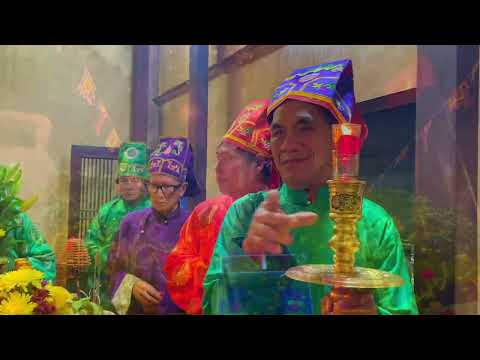
Chieu Trung Temple Festival
The first light of dawn breaks over the Red River Delta as the rhythmic sound of ceremonial drums echoes through ancient courtyards. Incense smoke curls skyward, carrying the prayers of thousands while golden banners flutter in the morning breeze. This is the moment when Vietnam's spiritual heart beats strongest—during the sacred days of the Chieu Trung Temple Festival.
The Chieu Trung Temple Festival stands as one of northern Vietnam's most revered religious celebrations, honoring the legendary General Phung Hung who defended the nation against foreign invasion in the 8th century. Located in Son Tay, just outside Hanoi, this annual spring festival transforms a quiet temple complex into a vibrant center of devotion, where centuries-old traditions come alive through elaborate ceremonies, folk performances, and communal worship.
Echoes of Ancient Valor
The story of Chieu Trung Temple begins in the turbulent years of 791-802 AD, during the Tang Dynasty's occupation of Vietnam. General Phung Hung, a local hero from Duong Lam village, led a successful uprising against Chinese rule, briefly liberating the region and earning the reverent title "Bo Cai Dai Vuong" (King Father). Though his reign lasted only six months before his death, his legacy as a patriotic defender of Vietnamese independence lived on.
Following his passing, grateful villagers built Chieu Trung Temple to honor his spirit and seek his continued protection. The temple's name, meaning "Calling for Loyalty," reflects the community's enduring devotion to their fallen hero. Over the centuries, the site became a pilgrimage destination where people would come to pray for courage, justice, and national prosperity.
The festival tradition likely began during the Ly Dynasty (1009-1225), when ancestor veneration and hero worship became deeply embedded in Vietnamese spiritual practice. What started as simple memorial rites gradually evolved into the elaborate multi-day celebration we witness today.
Sacred Rhythms of Devotion
The Chieu Trung Temple Festival unfolds over three days during the third lunar month, typically falling in April. The celebration weaves together solemn religious ceremonies with joyous folk traditions, creating a tapestry of Vietnamese cultural expression.
The Opening Ceremony marks the festival's beginning with the "Le Khai Hoi", where temple elders and local officials formally invite General Phung Hung's spirit to receive the community's offerings. Participants dress in traditional ao dai and ao gam, while temple guardians don elaborate costumes representing ancient court officials.
The festival's ceremonial elements include:
- Incense offering rituals performed by families seeking blessings for health and prosperity
- Traditional opera performances (hat cheo) recounting the general's heroic deeds
- Lion and dragon dances that wind through temple courtyards to ward off evil spirits
- Processions carrying ornate palanquins and ceremonial weapons
- Folk games including human chess (co nguoi) and traditional wrestling
Musical accompaniment forms the festival's heartbeat, with ancient instruments creating an otherworldly atmosphere:
- Trong com (rice drum) sets the ceremonial pace
- Dan bau (monochord) provides haunting melodies
- Sao truc (bamboo flute) carries prayers skyward
- Chieng (gongs) announce important ritual moments
The festival's visual splendor centers on elaborate altars adorned with banh chung (sticky rice cakes), fresh fruits, flowers, and ruou can (rice wine) served in traditional bamboo tubes. Red and gold banners bearing Chinese calligraphy flutter throughout the complex, while devotees burn vang ma (votive paper) as offerings to the ancestral realm.
Threads of Community and Cosmos
Beyond its religious significance, the Chieu Trung Temple Festival serves as a powerful force for social cohesion and cultural preservation. The celebration reinforces core Vietnamese values: respect for ancestors, love of country, and the importance of collective memory in shaping national identity.
For local communities, the festival represents the year's most important gathering, when extended families reunite and social bonds are renewed. Villagers spend months preparing traditional foods, crafting ceremonial items, and rehearsing performances—activities that transmit cultural knowledge across generations.
The festival also embodies Vietnamese concepts of "bao hieu" (filial piety) and "bao quoc" (patriotism), demonstrating how personal virtue and national loyalty intertwine. General Phung Hung serves as an ideal model: a devoted son who became a national hero, showing how individual righteousness can serve the greater good.
Spiritually, the celebration connects participants to the "than linh" (spiritual realm), where ancestors continue to influence the living world. Through ritual offerings and prayers, devotees maintain relationships with the deceased while seeking guidance for contemporary challenges. This ongoing dialogue between past and present provides psychological comfort and cultural continuity in an rapidly changing world.
Journey to Sacred Grounds
The Chieu Trung Temple Festival offers visitors an authentic glimpse into Vietnamese spiritual life, away from the commercialized tourism of major cities. Located in Son Tay, about 40 kilometers west of Hanoi, the temple complex is easily accessible yet retains its traditional character.
When to Visit: The main festival occurs during the third lunar month (usually April), with the most elaborate ceremonies taking place on the 8th, 9th, and 10th days. However, smaller rituals and preparations begin several days earlier, offering quieter opportunities for observation.
Getting There: Regular buses depart from Hanoi's My Dinh Bus Station to Son Tay, followed by a short motorbike taxi ride to the temple. Many visitors combine the festival with trips to nearby Duong Lam Ancient Village, General Phung Hung's birthplace.
Temple Complex Highlights
Main Sanctuary: The temple's heart features an ornate altar with General Phung Hung's statue, surrounded by traditional architectural details including carved wooden panels and ceramic roof tiles.
Ceremonial Courtyards: Multiple open spaces accommodate different festival activities, from formal rituals to folk performances and community gatherings.
Memorial Steles: Ancient stone tablets record the general's achievements and the temple's history, providing historical context for modern visitors.
Festival Etiquette: Visitors should dress modestly, remove shoes before entering sacred spaces, and maintain respectful silence during ceremonies. Photography is generally permitted but avoid using flash during rituals. Small donations to support temple maintenance are appreciated but not required.
The festival typically draws thousands of participants, so arriving early ensures better viewing positions for major ceremonies. Local food vendors offer traditional snacks and meals, while small shops sell religious items and festival souvenirs. For the most meaningful experience, consider staying overnight in Son Tay to witness both evening and dawn rituals, when the spiritual atmosphere reaches its peak intensity.
Featured Video
Video Toàn Cảnh Lễ Hội Huý Nhật Đức Thánh Chiêu Trưng Đại Vương Lê Khôi 2024 - Đền Đông Phương
Heritage Details
Official Recognition Information
- Official Name (Vietnamese)
- Lễ hội Đền Chiêu Trưng
- Description
- The Chieu Trung Temple Festival in Thua Thien Hue, Vietnam, is a vibrant celebration of the country's rich cultural heritage, showcasing traditional rituals, music, and crafts that have been passed down for generations.