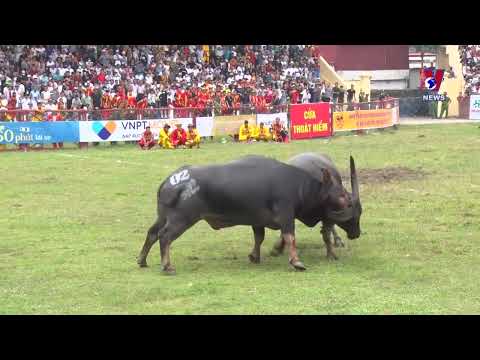
Do Son Buffalo Fighting Festival
The summer sun beats down as thunderous hooves pound the muddy arena. The crowd roars with anticipation, a sea of faces fixated on two majestic water buffaloes locked in an ancient dance of strength and dominance. Drums echo, incense swirls, and for a moment, time stands still in the coastal town of Do Son as centuries-old tradition breathes in modern air.
The Do Son Buffalo Fighting Festival is one of Vietnam's most distinctive and long-standing cultural celebrations. Held annually in the coastal district of Do Son in Hai Phong city, this event transcends simple entertainment to embody a profound cultural heritage that connects modern Vietnamese with their agricultural roots and spiritual beliefs. The festival culminates in a grand tournament where specially selected and trained water buffaloes compete in a display of strength that has captivated locals and visitors for centuries.
The Warrior's Path: Origins Steeped in Legend and Faith
The roots of the Do Son Buffalo Fighting Festival stretch back over 500 years to the Lê Dynasty, though some local legends suggest even earlier origins. According to traditional accounts, the festival began as a way to maintain the fighting spirit of soldiers during peacetime, with the buffalo—a symbol of strength and perseverance in Vietnamese culture—serving as the perfect embodiment of martial valor.
Another compelling origin story ties the festival to the spiritual beliefs of Vietnam's agricultural society. Local fishermen would organize buffalo fights before setting out to sea, believing that the spectacle would please the gods and ensure their safety and bountiful catches. The buffalo, already revered as an essential partner in farming, became a sacred vessel through which communities could communicate with divine forces.
Over the centuries, what began as a local ritual gradually evolved into an institutionalized celebration, gaining royal recognition during the Nguyen Dynasty and continuing to adapt and survive through Vietnam's complex history of colonialism, war, and modernization.
The Sacred Combat: Ritual, Selection, and Battle
The Do Son Buffalo Fighting Festival is far more than a spontaneous sporting event—it is a meticulously organized ritual with deep cultural significance that unfolds over many months:
Buffalo Selection and Training
- Only male buffaloes between 4-5 years of age are eligible to compete
- Selection begins nearly a year before the festival
- Owners search for animals with specific physical traits: broad chests, thick necks, well-developed muscles, and imposing horns
- Selected buffaloes undergo specialized training and nutrition regimens
- The animals receive preferential treatment, including special diets of rice, bananas, and rice wine
The chosen buffaloes, called trâu chọi (fighting buffaloes), become sources of immense pride for their owners and villages. Their training involves not only physical conditioning but also acclimation to crowds and noise to prepare them for the festival environment.
The Festival Proceedings
The festival officially begins on the 9th day of the 8th lunar month with elaborate opening ceremonies. Before dawn, a solemn procession moves from the village to Do Son beach, where lễ cầu ngư (prayers to the sea gods) are performed. This includes offerings of incense, fruit, and rice wine, accompanied by traditional music.
The tournament itself follows a strict elimination format. Pairs of buffaloes face off in the arena, and a match is decided when one buffalo retreats or shows submission. The winning buffalo advances to the next round, culminating in a championship match that determines the year's ultimate victor.
Throughout the contests, professional announcers provide commentary while traditional musicians maintain a rhythmic soundtrack that builds tension and celebrates victorious moments. The festival atmosphere combines reverent ceremony with carnival-like celebration, as thousands of spectators gather to witness this living heritage.
Beyond the Arena: Cultural Significance and Community Identity
For the people of Do Son and surrounding regions, the buffalo fighting festival represents far more than entertainment—it embodies a complex web of cultural values and community identity.
The festival honors Vietnam's agrarian heritage, acknowledging the crucial role the water buffalo has played in traditional farming. As Vietnam rapidly modernizes, this connection to agricultural traditions becomes increasingly significant as a touchpoint to cultural roots.
On a spiritual level, the festival remains connected to animistic beliefs and the veneration of natural forces. Many participants still view the contest as a form of divination—the performance of the buffaloes potentially foretelling the coming year's harvests, fishing yields, and community fortune.
Perhaps most importantly, the festival serves as a powerful social bonding mechanism. Preparations involve entire villages working collectively, reinforcing community ties across generations. For buffalo owners, having an animal selected for competition brings tremendous prestige, while winning the tournament can elevate a family's social standing for years.
This cultural institution has also become an important marker of regional identity for Hai Phong province, distinguishing the coastal communities of northern Vietnam and preserving their unique cultural expressions in an increasingly homogenized world.
Witnessing the Tradition: A Visitor's Guide to Do Son Festival
When to Visit
The Do Son Buffalo Fighting Festival typically takes place on the 9th day of the 8th lunar month (usually falling in September of the Gregorian calendar). However, the exact date varies each year according to the lunar calendar, so visitors should verify the precise timing before planning their trip.
The main tournament begins early in the morning and can last until late afternoon. For the full cultural experience, arrive at least one day before to witness the preparation ceremonies and community festivities that precede the main event.
Getting There and Accommodation
Do Son is located about 20 kilometers southeast of Hai Phong city center. Visitors can:
- Take a direct bus from Hanoi to Hai Phong (approximately 2-3 hours)
- From Hai Phong center, local buses or taxis can reach Do Son in 30-40 minutes
- Stay in Hai Phong city, which offers more accommodation options
- Book beachside resorts in Do Son itself for a more immersive experience (though these fill quickly during festival time)
Visitor Etiquette and Experience
The festival attracts thousands of spectators, including both domestic and international visitors. To respectfully engage with this cultural heritage:
- Arrive early to secure good viewing positions
- Dress modestly and appropriately for the weather (typically hot and humid)
- Be prepared for large crowds and festive atmosphere
- Show respect during ceremonial components of the festival
- Consider hiring a local guide who can explain the significance of different rituals and match dynamics
Beyond the buffalo fights themselves, visitors can enjoy associated festivities including traditional music performances, local culinary specialties, and handicraft displays. The coastal setting of Do Son also offers beautiful beaches and seafood restaurants to round out your cultural experience.
While animal welfare concerns have been raised regarding the festival, it's important to approach with cultural sensitivity and an understanding that the event represents a centuries-old tradition where the buffaloes are typically treated with great care and reverence throughout the year.
Featured Video
Do Son buffalo fighting festival resumed in Hai Phong
Heritage Details
Official Recognition Information
- Official Name (Vietnamese)
- Lễ hội Chọi trâu Đồ Sơn
- Description
- The annual Do Son Buffalo Fighting Festival in Vietnam's coastal Hai Phong City showcases a centuries-old ritual of strength, tradition, and cultural pride, where the majestic bovine competitors captivate spectators with their fierce, awe-inspiring battles.