Flower Praying Festival of the Kinh
In the gentle pre-dawn light, families gather with armfuls of fragrant blooms—lotus petals still kissed by dew, chrysanthemums in golden abundance, and delicate orchids that seem to hold whispered prayers within their silken folds. The air hums with quiet reverence as incense mingles with the natural perfume of flowers, creating an ethereal atmosphere where the earthly and divine converge.
The Flower Praying Festival (Lễ Cúng Hoa) represents one of Vietnam's most poetic spiritual traditions, where the Kinh people—Vietnam's ethnic majority—honor their ancestors and deities through the sacred language of flowers. This deeply rooted custom transforms homes and temples into fragrant sanctuaries, where each carefully chosen bloom carries prayers, gratitude, and hopes for prosperity across generations.
Petals of Ancient Devotion
The origins of the Flower Praying Festival trace back over a millennium to the Ly Dynasty (1009-1225), when Buddhism flourished alongside traditional Vietnamese ancestor worship. Legend speaks of Emperor Ly Thai To, who dreamed of a golden dragon emerging from a lotus pond, inspiring him to establish Thang Long (present-day Hanoi) and elevate the lotus as a sacred symbol.
During this golden age, Vietnamese scholars and monks developed the philosophical foundation that flowers possessed linh khí—spiritual energy capable of bridging the mortal and immortal realms. The practice evolved from royal court ceremonies into a beloved folk tradition, with each region developing its own floral vocabulary for communicating with the divine.
The festival gained particular prominence during the Tran Dynasty (1225-1400), when Vietnamese culture synthesized Confucian filial piety, Buddhist compassion, and indigenous animistic beliefs into a harmonious spiritual practice centered around nature's most beautiful offerings.
The Sacred Art of Floral Offerings
The heart of the Flower Praying Festival lies in the meticulous preparation and presentation of mâm cúng hoa—elaborate flower altars that transform ordinary spaces into celestial gardens.
The Five Sacred Blooms
Traditional arrangements feature five essential flowers, each carrying distinct spiritual significance:
- Lotus (Hoa Sen): Purity, enlightenment, and rebirth
- Chrysanthemum (Hoa Cúc): Longevity, nobility, and autumn's wisdom
- Orchid (Hoa Lan): Refinement, fertility, and scholarly achievement
- Peach Blossom (Hoa Đào): Spring renewal, good fortune, and protection
- Apricot Blossom (Hoa Mai): Prosperity, resilience, and new beginnings
Ritual Preparation
The ceremony begins before sunrise, when families gather to create their offerings with reverent precision:
Morning Preparation: Women and children venture to markets or gardens, selecting only the freshest blooms while reciting quiet prayers. The flowers must be gathered with clean hands and pure intentions.
Altar Arrangement: Following ancient principles of phong thủy (feng shui), flowers are arranged in odd numbers—traditionally three, five, or seven stems per variety. White flowers occupy the center, symbolizing purity, while colorful blooms create a harmonious circle representing life's eternal cycle.
Incense and Prayers: As nhang hương (incense sticks) release their sacred smoke, family elders lead prayers in classical Vietnamese, invoking ancestors' blessings and expressing gratitude for life's abundance.
Blossoms of Spiritual Connection
Beyond their aesthetic beauty, flower offerings serve as profound spiritual conduits within Vietnamese cosmology. The festival embodies đạo lý con người—the moral path of humanity—where respect for nature intertwines with reverence for ancestors.
Each flower arrangement becomes a meditation on impermanence and renewal. As petals wilt and fall, they remind participants that beauty, like life itself, is precious precisely because it is fleeting. This Buddhist-influenced philosophy encourages mindful appreciation of present moments while maintaining eternal connections with departed loved ones.
The communal aspect proves equally significant. Neighbors share rare flowers, elderly relatives teach children proper arrangement techniques, and entire communities unite in temple ceremonies. These shared rituals strengthen tình làng nghĩa xóm—the bonds of neighborhood solidarity that form Vietnamese society's foundation.
Young people learn not merely flower arranging, but the deeper values of gratitude, patience, and spiritual discipline that have sustained Vietnamese culture through centuries of change.
Gardens of Sacred Experience
Hanoi's Temple Circuit
Bach Ma Temple in Hanoi's Old Quarter hosts the capital's most spectacular flower ceremonies during the festival. Dating to the Ly Dynasty, this ancient sanctuary overflows with lotus arrangements that create an almost mystical atmosphere. Visit between 5-7 AM to witness the most authentic rituals.
Temple of Literature transforms into a scholarly paradise where orchids and chrysanthemums honor Confucius and Vietnam's greatest minds. The peaceful courtyards provide perfect settings for contemplative photography and cultural immersion.
Ho Chi Minh City Celebrations
Jade Emperor Pagoda becomes a sensory wonderland during flower festival days, with elaborate arrangements complementing the temple's mystical Taoist atmosphere. The combination of incense, flowers, and ancient statuary creates an unforgettable spiritual experience.
When to Experience the Magic
The Flower Praying Festival occurs multiple times yearly, aligned with lunar calendar celebrations:
- Tet Nguyen Dan (Lunar New Year): The most elaborate celebrations
- Tet Trung Thu (Mid-Autumn Festival): Focus on family reunion themes
- Vu Lan Festival (Ghost Festival): Honoring departed ancestors
- Monthly full moon days: Smaller, intimate family ceremonies
Visitor Tips: Arrive early morning (5-8 AM) for the most authentic experience. Dress modestly, maintain quiet reverence, and ask permission before photographing. Consider purchasing flowers from temple vendors to make your own small offering—this gesture of participation will be warmly welcomed by locals.
The Flower Praying Festival offers travelers a rare glimpse into Vietnam's spiritual heart, where ancient wisdom blooms eternal through nature's most delicate messengers.
Featured Video
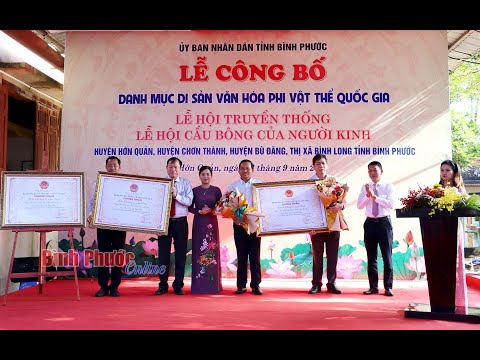
Lễ công bố danh mục di sản văn hoá phi vật thể quốc gia lễ hội Cầu bông của người Kinh ở Bình Phước.
Heritage Details
Official Recognition Information
- Official Name (Vietnamese)
- Lễ hội Cầu bông của người Kinh
- Description
- The Flower Praying Festival in Vietnam's Mekong Delta region is a vibrant cultural celebration where the Kinh people honor their agricultural roots and seek blessings for a bountiful harvest through the symbolic offering of flowers.