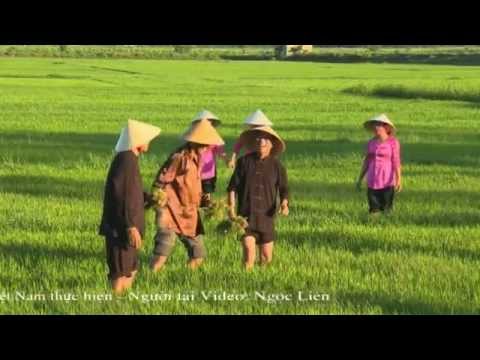
Le Thuy Ho Khoan Folk Song
In the quiet villages of Le Thuy district, where the Gianh River winds through emerald rice paddies and ancient banyan trees cast long shadows, the haunting melodies of Ho Khoan drift across the evening air. These are not mere songs, but the living breath of a community—work chants that have synchronized the rhythm of daily labor for centuries, transforming the mundane act of rice husking into a symphony of human connection.
Le Thuy Ho Khoan represents one of Vietnam's most authentic folk singing traditions, originating from the coastal district of Le Thuy in Quang Binh Province. These traditional work songs, known as "Ho Khoan" (literally meaning "husking songs"), emerged as a practical and cultural response to the collective labor of rice processing, where communities would gather to husk rice while singing in unison to maintain rhythm and boost morale.
Songs Born from the Rhythm of Rice
The origins of Le Thuy Ho Khoan trace back several centuries to the agricultural communities along the Gianh River basin. During the feudal period, when rice cultivation formed the backbone of rural Vietnamese society, the arduous task of husking rice by hand required coordination among workers to maximize efficiency. What began as simple rhythmic chants to synchronize the pounding of wooden pestles gradually evolved into sophisticated musical expressions.
Local folklore suggests that the tradition crystallized during the Le Dynasty (1428-1789), when Le Thuy's strategic position as a river port brought together diverse cultural influences. Merchants, farmers, and fishermen contributed their own melodic traditions, creating a unique fusion that distinguished Le Thuy's Ho Khoan from similar work songs found elsewhere in Vietnam. The songs served not only as work aids but also as a means of preserving local history, with lyrics often recounting historical events, local legends, and moral teachings.
The Art of Collective Harmony
The performance of Le Thuy Ho Khoan requires both musical skill and physical coordination, as the singing is intrinsically linked to the rhythmic motion of rice husking. The traditional setup involves:
Essential Elements:
- Cối giã (wooden mortar) - typically carved from hardwood
- Chày (wooden pestle) - operated by 2-4 people in synchronized movements
- Trống (small drum) - to maintain the basic rhythm
- Ca khúc (lead singer) - usually an experienced elder who guides the melody
The musical structure follows a call-and-response pattern, where the lead singer (ca khúc) initiates each verse, and the working group responds in chorus while maintaining the pounding rhythm. The tempo varies according to the stage of husking:
- Slow rhythm during initial breaking of rice husks
- Moderate tempo for steady husking work
- Accelerated pace during the final cleaning phase
The lyrics are largely improvisational, allowing singers to comment on current events, tease fellow workers, or share local gossip, making each performance unique. Traditional themes include:
- Celebrations of harvest abundance
- Romantic courtship and village matchmaking
- Moral lessons and Confucian values
- Historical narratives of local heroes
- Seasonal observations and weather patterns
The Soul of Community Bonding
Beyond its practical function, Le Thuy Ho Khoan serves as a vital mechanism for social cohesion and cultural transmission. The tradition embodies the Vietnamese concept of "tương thân tương ái" (mutual love and support), where individual labor contributes to collective prosperity.
The songs create an inclusive environment where social hierarchies temporarily dissolve—wealthy landowners work alongside tenant farmers, and young people learn from their elders through shared melody. This democratic aspect of Ho Khoan reinforces community solidarity and ensures that traditional knowledge passes naturally between generations.
Spiritually, the practice connects participants to their ancestral heritage and the sacred relationship between humans and rice—Vietnam's most essential crop. Many lyrics invoke blessings for good harvests and express gratitude to the Thần Lúa (Rice Goddess), reflecting the deep spiritual significance of agricultural work in Vietnamese culture.
The tradition also serves as an informal education system, where historical events, moral values, and practical wisdom are embedded within memorable melodies, ensuring their preservation in predominantly oral rural communities.
Experiencing the Living Tradition
Where to Witness Ho Khoan Performances
Le Thuy District Cultural Center in Quang Binh Province hosts regular demonstrations of Ho Khoan, particularly during the harvest season (October-December) and during the Tet Nguyen Dan (Lunar New Year) celebrations. The center offers authentic performances by local master singers who have practiced the tradition for decades.
Traditional villages throughout Le Thuy district, including Thach Hoa, Thach Kim, and Thach Thang communes, maintain active Ho Khoan groups. Visitors can arrange homestays during harvest time to witness genuine work sessions where the songs serve their original purpose.
Best Times to Visit
- October to December: Harvest season offers the most authentic experiences
- Tet Holiday (January-February): Cultural festivals feature special performances
- Full moon evenings: Many villages hold informal singing gatherings
What to Expect
Visitors should prepare for an immersive cultural experience that engages all senses. The rhythmic pounding creates a percussive backdrop to the melodic voices, while the aroma of fresh rice and the sight of golden grains being separated from their husks provides a complete sensory journey into Vietnam's agricultural heritage.
Photography and recording are generally welcomed, but visitors should request permission and show respect for the cultural significance of the tradition. Many performers are happy to explain the meaning of specific songs and may even invite respectful visitors to participate in the simpler refrains.
Local guides familiar with the tradition can enhance the experience by providing cultural context and translation of the Vietnamese lyrics, helping visitors appreciate the wit, wisdom, and poetry embedded within these ancient work songs.
Featured Video
Hò khoan Lệ Thủy- Đối đáp giao duyên ( Bảo tồn HK ) - Liên
Heritage Details
Official Recognition Information
- Official Name (Vietnamese)
- Hò khoan Lệ Thủy
- Description
- Le Thuy Ho Khoan, a captivating Vietnamese folk song deeply rooted in the cultural heritage of Thanh Hoa province, showcases the melodic richness and soulful essence of the nation's musical traditions.