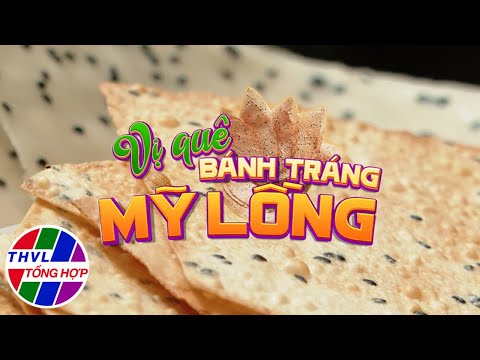
My Long Rice Paper Craft
The morning mist rises from the emerald fields of My Long village as delicate hands dip bamboo screens into milky pools of rice batter. Steam curls upward like incense, carrying with it the essence of a craft that has nourished bodies and souls for centuries. In this quiet corner of An Giang province, time moves to the rhythm of tradition—one paper-thin sheet at a time.
In the fertile Mekong Delta, where the river's nine tributaries weave through Vietnam's southern landscape, lies the village of My Long in Chau Doc district. Here, generations of artisans have perfected the ancient craft of bánh tráng (rice paper) making, transforming simple grains into the translucent foundation of Vietnamese cuisine. This isn't merely food production—it's a living heritage that connects modern Vietnam to its agricultural roots.
Whispers from the Mekong's Embrace
The story of My Long's rice paper craft flows like the mighty Mekong itself, with origins that stretch back over 300 years. Legend speaks of a resourceful woman during the Nguyen Dynasty who, facing food shortages in her village, discovered that spreading thin rice batter over bamboo screens and steaming it created durable, versatile sheets that could feed her family for days.
What began as necessity evolved into artistry. The unique geography of the Mekong Delta, with its rich alluvial soil and abundant water sources, provided the perfect conditions for cultivating the specific rice varieties needed for superior bánh tráng. The village of My Long, blessed with particularly pure water from underground springs, gradually became renowned throughout southern Vietnam for producing the finest rice papers—thin enough to read through, yet strong enough to wrap the most delicate spring rolls.
By the French colonial period, My Long rice paper had gained recognition beyond village borders. French settlers, enchanted by the gossamer sheets, began incorporating them into their own culinary experiments, unknowingly participating in an early form of fusion cuisine that would later influence Vietnamese-French gastronomy.
The Poetry of Paper-Thin Perfection
The creation of My Long rice paper is a symphony of precision, patience, and inherited wisdom. Each sheet represents a delicate balance of elements that takes years to master and a lifetime to perfect.
The process begins before dawn, when artisans select grains from specific rice varieties—primarily gạo tẻ (plain rice) blended with small amounts of gạo nàng hương (fragrant rice). These grains are soaked overnight in the village's prized spring water, which locals believe imparts a subtle sweetness impossible to replicate elsewhere.
The soaked rice undergoes a meticulous grinding process using traditional stone mills called cối xay đá. The resulting batter must achieve the perfect consistency—too thick and the papers will be heavy and opaque; too thin and they'll tear during the steaming process. Master craftspeople can judge the ideal texture by sight and touch alone, a skill passed down through generations like a closely guarded secret.
The heart of the process lies in the steaming stations, where bamboo screens called rá stretch taut over bubbling pots of water. The artisan's technique here is crucial:
- Dipping Motion: A swift, confident sweep spreads the batter evenly across the screen
- Steam Timing: Exactly 30-45 seconds creates the perfect texture
- Lifting Technique: The paper must be peeled while still warm but not hot
- Drying Arrangement: Sheets are laid on bamboo mats under carefully controlled sunlight
The most skilled artisans can produce up to 1,000 sheets per day, each one uniform in thickness and free from tears or bubbles. Their hands move with balletic grace, a meditation in motion that transforms humble rice into edible art.
Threads That Bind Community and Culture
My Long rice paper transcends its role as mere ingredient—it serves as the invisible thread weaving together Vietnam's social fabric. In Vietnamese culture, bánh tráng represents adaptability and resilience, qualities deeply embedded in the national character.
During family gatherings, the act of wrapping spring rolls together using My Long rice paper becomes a ritual of bonding. Grandmothers teach grandchildren the proper technique for softening the papers in warm water, the ideal amount of filling to use, and the precise folding method that prevents tearing. These moments pass down not just culinary skills, but cultural values of patience, precision, and respect for craftsmanship.
The rice paper also holds spiritual significance in Vietnamese Buddhism and ancestor worship. Its pure white color symbolizes clarity of mind and spiritual cleansing. During Tết (Lunar New Year) celebrations, families use My Long rice paper to prepare offerings for ancestral altars, believing that the quality and purity of the ingredients reflect their devotion and respect.
For the artisans themselves, the craft provides more than livelihood—it offers identity and purpose. Many describe their work as a form of meditation, finding peace in the repetitive motions and satisfaction in creating something both beautiful and nourishing. The village has developed a strong sense of collective pride, with families competing good-naturedly to produce the finest, most delicate papers.
Journey to the Heart of Tradition
Visiting My Long Village
My Long village welcomes visitors seeking authentic cultural experiences beyond typical tourist trails. Located approximately 240 kilometers southwest of Ho Chi Minh City, the village is best accessed through Chau Doc town, a scenic 30-minute drive through rice paddies and traditional Mekong Delta landscapes.
The optimal time to visit is during the dry season (November through April), when weather conditions are ideal for rice paper production and outdoor drying. Early morning visits (5:00-8:00 AM) offer the most authentic experience, as this is when artisans begin their daily work and the village comes alive with gentle activity.
What to Expect
Visitors can participate in hands-on workshops where master craftspeople demonstrate the entire process from rice grinding to final drying. These experiences typically last 2-3 hours and include:
- Traditional rice grinding using stone mills
- Guided practice in batter preparation and consistency testing
- Supervised attempts at the steaming and lifting technique
- Tasting sessions featuring fresh rice paper with local accompaniments
Supporting Local Artisans
Several family-run workshops offer direct sales to visitors, allowing travelers to purchase authentic My Long rice paper while supporting the community. The village has also developed a small cooperative that exports their products internationally, helping preserve this traditional craft for future generations.
Many visitors combine their My Long experience with broader Mekong Delta tours, creating rich cultural itineraries that showcase the region's agricultural heritage. Local guides, often descendants of rice paper artisans themselves, provide invaluable insights into the craft's history and its place in contemporary Vietnamese life.
The village's commitment to preserving traditional methods while adapting to modern challenges makes it a compelling destination for cultural tourists seeking meaningful connections with Vietnam's living heritage.
Featured Video
Nhịp sống đồng bằng: Vị quê bánh tráng Mỹ Lồng
Heritage Details
Official Recognition Information
- Official Name (Vietnamese)
- Nghề làm Bánh tráng Mỹ Lồng
- Description
- Discover the centuries-old tradition of My Long rice paper crafting, a captivating cultural heritage in Vietnam's Mekong Delta region, where artisans meticulously transform rice into delicate, translucent sheets, showcasing the essence of Vietnamese culinary and craft legacy.