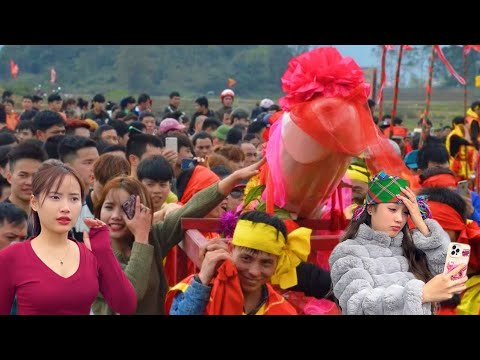
Na Nhem Festival
In the misty mountains of Cao Bang, where ancient limestone peaks pierce the clouds and the scent of wild orchids fills the air, the rhythmic beating of bronze drums echoes through valleys that have witnessed centuries of tradition. This is the call of Na Nhem, where the Tay people gather to honor their ancestors and celebrate the eternal cycle of life.
Deep in Vietnam's northernmost province of Cao Bang, the Na Nhem Festival stands as one of the most sacred and vibrant celebrations of the Tay ethnic minority. This annual spring festival, whose name translates to "field of celebration," transforms quiet mountain villages into bustling centers of spiritual devotion, cultural expression, and community unity. For the Tay people, Na Nhem represents far more than a festival—it is a bridge connecting the living with their ancestors, the earth with the heavens, and tradition with the hopes of future generations.
Whispers from Ancient Valleys
The origins of Na Nhem stretch back over a millennium, rooted in the animistic beliefs and agricultural traditions of the Tay people who settled in the limestone valleys of northern Vietnam during the early centuries of the Common Era. According to Tay oral tradition, the festival was born from a divine vision received by a legendary village elder named Thầy Cả, who dreamed of ancestral spirits dancing among the rice terraces, blessing the coming harvest.
Historical records suggest that Na Nhem evolved during the Ly Dynasty (1009-1225), when the Tay people adapted their ancient spring rituals to incorporate influences from both Chinese Taoism and Vietnamese folk religion. The festival's timing, aligned with the lunar calendar's second month, reflects the Tay understanding of cosmic harmony—when the earth awakens from winter's slumber and the spirits of ancestors return to guide their descendants through another agricultural cycle.
The festival's endurance through centuries of political change, from feudal kingdoms to French colonialism to modern Vietnam, speaks to its profound importance in Tay cultural identity. Even during periods when traditional practices were discouraged, Tay communities preserved Na Nhem's essential elements, passing down songs, dances, and rituals through generations of devoted practitioners.
The Sacred Choreography of Celebration
Na Nhem unfolds over three days in a carefully orchestrated symphony of ritual, art, and community gathering. The festival's heart beats within the đình (communal house), where elaborate altars overflow with offerings of sticky rice, roasted pork, and locally distilled ruou can (tube wine), while clouds of incense carry prayers skyward.
The celebration begins with the lễ cúng tổ tiên (ancestor worship ceremony), led by village elders dressed in traditional indigo-dyed clothing adorned with intricate silver jewelry. The ceremony's centerpiece is the Then singing tradition, where shamanic practitioners called thầy cúng enter trance-like states to communicate with ancestral spirits. Their haunting melodies, accompanied by the three-stringed tính tẩu lute, create an otherworldly atmosphere that seems to thin the veil between worlds.
Key elements of the Na Nhem experience include:
- Traditional Tay opera performances featuring elaborate costumes and masks representing mythological figures
- Competitive folk games such as nem con (throwing a fabric ball through bamboo rings) and kéo co (tug of war)
- Culinary exhibitions showcasing specialties like bánh dày (flat sticky rice cake) and thắng cố (horse meat soup)
- Textile demonstrations where master weavers display the intricate thổ cẩm brocade techniques passed down through generations
- Bronze drum performances using ancient instruments that archaeologists believe are over 2,000 years old
The festival reaches its crescendo on the final evening with the múa xòe circle dance, where hundreds of participants join hands around bonfires, their movements echoing the eternal cycles of planting and harvest, death and rebirth that define rural life in these mountain valleys.
The Soul of Community and Cosmos
For the Tay people, Na Nhem serves as both spiritual anchor and social glue, reinforcing cultural values that have sustained their communities for generations. The festival embodies the Tay worldview of tam giáo (three teachings), harmoniously blending ancestral worship, natural reverence, and community solidarity.
The spiritual dimension of Na Nhem centers on the belief that ancestors actively participate in the lives of their descendants, offering protection, wisdom, and blessings for prosperity. Through elaborate offerings and ritual performances, families renew their connections with deceased relatives, seeking guidance for important decisions and expressing gratitude for past protection. The festival's timing during the agricultural season emphasizes the Tay understanding that spiritual harmony directly influences material well-being.
Beyond its religious significance, Na Nhem functions as a vital mechanism for cultural transmission and social cohesion. Young people learn traditional songs, dances, and crafts from master practitioners, ensuring that ancient knowledge flows to new generations. The festival also serves as a matchmaking opportunity, where young men and women from different villages meet during courtship rituals like the hát luon (antiphonal singing) competitions.
The celebration reinforces Tay values of mutual support and collective responsibility, as entire communities contribute labor, resources, and skills to ensure the festival's success. This spirit of cooperation extends beyond the festival itself, strengthening social bonds that sustain these mountain communities throughout the year.
Journey to the Heart of Tay Culture
Na Nhem takes place annually in late February or early March (depending on the lunar calendar) across numerous Tay villages in Cao Bang province, with the most elaborate celebrations occurring in the districts of Ha Quang, Tra Linh, and Quang Uyen. The festival's remote mountain locations require careful planning but reward visitors with authentic cultural experiences rarely accessible to outsiders.
Getting There and When to Visit
The journey to Na Nhem begins in Cao Bang city, accessible by bus from Hanoi (approximately 6 hours) or by motorbike for the more adventurous. Local guides are essential for navigating the mountain roads and understanding the festival's complex rituals. The optimal visiting period spans the three main festival days, though preparatory activities begin a week earlier.
What to Expect
Visitors should prepare for rustic accommodations in village homestays, where Tay families welcome guests with remarkable hospitality. The festival experience includes sharing meals prepared over wood fires, sleeping on traditional wooden beds, and participating in community activities. Photography is generally welcomed, though visitors should always ask permission before capturing ritual moments.
Cultural Etiquette
Respectful participation in Na Nhem requires understanding of Tay customs. Visitors should dress modestly, remove shoes when entering sacred spaces, and avoid pointing feet toward altars or elderly people. Accepting offered food and drink demonstrates respect, while learning basic Tay greetings creates meaningful connections with local people.
The Na Nhem Festival offers modern travelers a rare glimpse into a living cultural tradition that has survived centuries of change. For those willing to venture into Vietnam's remote mountains, the festival provides profound insights into the spiritual richness and community bonds that continue to define ethnic minority life in contemporary Vietnam.
Featured Video
LỄ HỘI NÁ NHÈM 2025 - RƯỚC “ĐẦU BỜ” TO HƠN TẠ CHỊ EM SUNG SƯỚNG
Heritage Details
Official Recognition Information
- Official Name (Vietnamese)
- Lễ hội Ná nhèm
- Description
- The Na Nhem Festival, held in the picturesque village of Na Nhem, Vietnam, celebrates the vibrant cultural heritage of the region, showcasing traditional music, dance, and the time-honored craft of bamboo weaving.