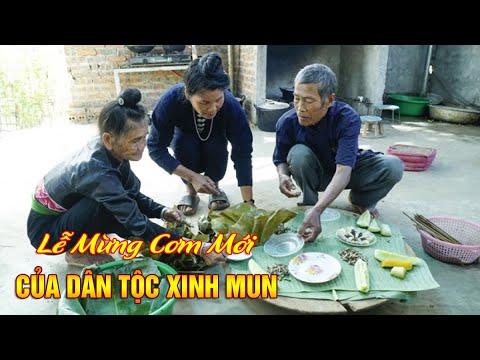
New Rice Celebration of the Xinh Mun
In the misty highlands of northern Vietnam, where ancient forests meet terraced fields carved into mountainsides, the first grains of new rice shimmer like golden promises. The Xinh Mun people gather as their ancestors have for centuries, their voices rising in gratitude to the spirits of the harvest, their hands offering the season's first bounty to ensure prosperity flows like mountain streams into the coming year.
The New Rice Celebration of the Xinh Mun people is one of Vietnam's most profound agricultural festivals, marking the sacred transition from harvest to sustenance. This deeply spiritual ceremony honors not just the rice crop itself, but the intricate relationship between the Xinh Mun community, their ancestral spirits, and the natural world that sustains them. Practiced in the remote mountainous regions where the Xinh Mun have cultivated their unique cultural identity, this celebration represents thousands of years of agricultural wisdom and spiritual reverence.
Whispers from the Ancient Terraces
The origins of the Xinh Mun New Rice Celebration stretch back to the earliest settlements of this ethnic minority group in Vietnam's northern highlands. Archaeological evidence suggests that the Xinh Mun, part of the larger Mon-Khmer linguistic family, have practiced sophisticated rice cultivation in these challenging mountain terrains for over a millennium.
Legend tells of Pu Luong, the rice spirit, who first taught the Xinh Mun ancestors how to transform wild grasses into the life-sustaining grain that would become the foundation of their civilization. According to oral traditions passed down through generations, the spirit appeared during a time of great famine, showing the people how to read the mountain's moods, when to plant, and how to coax abundant harvests from seemingly impossible slopes.
The celebration evolved as a covenant between the living and the spiritual realm—a promise that if the people honored the first rice with proper ceremony, the spirits would ensure continued abundance. This sacred contract has remained unbroken, even as dynasties rose and fell in the lowlands, making the New Rice Celebration one of Vietnam's most enduring cultural practices.
Sacred Grains and Ancestral Blessings
The New Rice Celebration unfolds over three days, each phase carefully orchestrated to honor different aspects of the harvest cycle. The ceremony begins at dawn on the day when village elders determine the rice has reached perfect ripeness—a decision based on generations of accumulated knowledge about grain color, texture, and the subtle signs nature provides.
Day One: The Awakening
- Village shamans, called thầy cúng, perform purification rituals at the edge of the rice fields
- Sacred water from mountain springs is blessed and sprinkled over the terraces
- The community fasts from sunrise to sunset, preparing spiritually for the harvest
Day Two: The Gathering
- Families harvest the first rice using traditional curved knives called liềm
- Young unmarried women, dressed in their finest áo tấc (traditional Xinh Mun dresses) with intricate silver jewelry, lead the harvest procession
- Cơm mới (new rice) is cooked in bamboo tubes over sacred fires lit with flint and traditional tinder
Day Three: The Offering The culmination involves elaborate altar preparations where the new rice is presented to ancestors. Families arrange offerings including:
- Bowls of steaming cơm mới formed into perfect mounds
- Rượu cần (traditional rice wine) served in carved gourds
- Incense made from local aromatic woods
- Fresh flowers from the mountain forests
The thầy cúng chants ancient prayers in the Xinh Mun language, invoking protection for the coming year and expressing gratitude for the harvest. These chants, some containing words no longer used in daily speech, connect the present moment to countless generations of ancestors who performed identical rituals on the same sacred grounds.
The Soul of Community and Continuity
Beyond its agricultural significance, the New Rice Celebration serves as the spiritual heartbeat of Xinh Mun society. The ceremony reinforces the community's understanding of their place in the natural order—not as masters of the land, but as partners in an ancient dance of reciprocity with the earth and sky.
The celebration strengthens social bonds through collective labor and shared ritual. Extended families who may be scattered across different villages throughout the year reunite for the ceremony, reinforcing kinship ties and ensuring cultural knowledge passes to younger generations. Children learn not just the practical aspects of rice cultivation, but the spiritual responsibilities that come with receiving nature's gifts.
The festival also serves as a form of environmental stewardship education. Elders use the ceremony to teach young people about sustainable farming practices, the importance of preserving seed varieties, and reading natural signs for optimal planting times. This knowledge, encoded in ritual and song, has enabled the Xinh Mun to maintain productive agriculture in challenging mountain conditions for centuries.
For the Xinh Mun, the new rice represents more than food—it symbolizes the continuation of life itself, the connection between past and future, and the community's collective survival. The first taste of cơm mới is considered to carry the blessings of ancestors and the promise of prosperity for the coming year.
Witnessing the Sacred Harvest
Best Times to Visit
The New Rice Celebration typically occurs between late September and early October, though exact dates vary according to local agricultural conditions and lunar calendar calculations. Visitors should contact local cultural centers or tourism offices in Sơn La or Lai Châu provinces several weeks in advance, as the ceremony dates are announced only after village elders assess crop readiness.
Getting There
The primary Xinh Mun communities celebrating this festival are located in:
Sơn La Province:
- Mường La District: Home to several traditional Xinh Mun villages
- Sông Ma District: Features spectacular terraced landscapes and active ceremonial sites
Lai Châu Province:
- Phong Thổ District: Known for particularly elaborate celebrations
- Tam Đường District: Offers homestay opportunities with participating families
What to Expect
Visitors should prepare for a deeply authentic cultural experience that requires respect and sensitivity. The celebration is not a performance for tourists but a living religious ceremony. Photography may be restricted during certain sacred moments, and guests are expected to dress modestly and follow local customs.
Accommodation: Traditional homestays with Xinh Mun families offer the most immersive experience, though basic guesthouses are available in district centers.
Transportation: Four-wheel drive vehicles are necessary for reaching remote villages, and the final approach may require hiking on mountain paths.
Cultural Etiquette: Visitors should bring small gifts for host families, remove shoes when entering homes, and avoid pointing directly at sacred objects or altars.
The New Rice Celebration offers a rare window into one of Vietnam's most authentic cultural traditions, where ancient wisdom continues to guide daily life and the rhythms of the natural world still dictate the community's most important celebrations.
Featured Video
ĐIỆN BIÊN - Lễ mừng cơm mới của người Xinh Mun | Sắc màu văn hóa
Heritage Details
Official Recognition Information
- Official Name (Vietnamese)
- Lễ mừng cơm mới của người Xinh Mun
- Description
- The Xinh Mun New Rice Celebration, a vibrant cultural festival in Vietnam's Pu Luong Nature Reserve, honors the traditional rice farming practices and the community's profound connection to the land and its bountiful harvest.