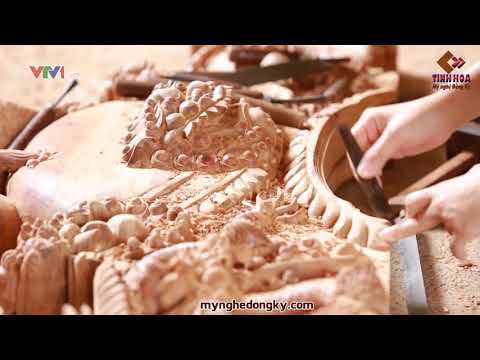
Phu Khe Wood Carving Craft
In the quiet workshops of Phu Khe village, the rhythmic tap-tap-tap of chisels against wood creates a symphony that has echoed for over four centuries. Here, in the shadow of ancient pagodas, master craftsmen breathe life into timber, their weathered hands guided by generations of ancestral wisdom, transforming humble blocks of wood into sacred guardians and celestial beings.
Nestled in Bac Ninh Province, just 30 kilometers northeast of Hanoi, the village of Phu Khe stands as Vietnam's most renowned center for traditional wood carving. This ancient craft, recognized as a National Intangible Cultural Heritage, represents the pinnacle of Vietnamese sculptural artistry, where Buddhist spirituality meets extraordinary technical mastery to create some of the most revered religious sculptures in Southeast Asia.
Whispers from the Le Dynasty
The story of Phu Khe's wood carving legacy begins in the early 17th century during the Le Dynasty, though local legends trace its origins even deeper into the mists of time. According to village elders, the craft was born from divine inspiration when a local artisan named Nguyen Van Duc received a prophetic dream featuring the Buddha himself, who taught him the sacred art of carving religious statues.
Historical records suggest that Phu Khe's prominence grew during the reign of King Le Thanh Tong, when the village became the primary supplier of wooden sculptures for temples and pagodas throughout northern Vietnam. The craft flourished under royal patronage, with master carvers developing increasingly sophisticated techniques that would be passed down through carefully guarded family lineages.
The village's strategic location near the ancient capital of Thang Long (modern-day Hanoi) provided access to both imperial commissions and the finest materials. Craftsmen could source premium hardwoods from the northern mountains while remaining close to the spiritual and political centers that demanded their work.
The Sacred Dance of Chisel and Wood
At its heart, Phu Khe wood carving is a deeply spiritual practice that transforms raw timber into vessels for divine presence. The process begins long before the first cut, with master craftsmen performing elaborate rituals to honor both the tree that gave its life and the deities who will inhabit the finished sculpture.
The selection of wood follows ancient principles, with artisans preferring gỗ mít (jackfruit wood), gỗ lim (ironwood), and gỗ gụ (rosewood) for their durability and spiritual properties. Each piece of timber must be aged for years, sometimes decades, to achieve the perfect balance of hardness and workability.
The carving process unfolds in distinct stages:
• Thiết kế (Design): Master craftsmen create detailed sketches based on Buddhist iconography, ensuring proper proportions according to ancient texts • Phác thảo (Rough shaping): Large chisels remove excess wood to establish the basic form • Tỉa tót (Detailed carving): Smaller tools bring out facial features, clothing folds, and ornamental details • Đánh bóng (Finishing): Multiple stages of sanding and polishing create the smooth, luminous surface • Sơn son thếp vàng (Lacquering and gilding): Traditional lacquer and gold leaf application complete the transformation
The tools themselves are considered sacred, with many đục (chisels) and dao (carving knives) passed down through generations. A master craftsman's toolkit may contain over 100 different implements, each designed for specific cuts and textures. The largest statues can take teams of artisans several years to complete, requiring extraordinary coordination and shared vision.
Guardians of the Sacred Realm
Beyond their artistic merit, Phu Khe wood carvings serve as bridges between the earthly and divine realms. Each statue is believed to house the spirit of the deity it represents, making the carver not merely an artist but a spiritual medium channeling divine energy into physical form.
The sculptures play crucial roles in Vietnamese Buddhist practice, serving as focal points for meditation, prayer, and ritual offerings. Families often commission personal statues for home altars, believing that properly carved and consecrated figures can bring protection, prosperity, and spiritual guidance to their households.
The craft also preserves essential elements of Vietnamese cultural identity. Through their work, Phu Khe artisans maintain connections to pre-Buddhist animistic traditions, Confucian values, and Taoist philosophy, creating a uniquely Vietnamese synthesis of spiritual beliefs expressed through wood.
Master carvers hold revered positions in village society, often serving as spiritual advisors and keepers of oral traditions. The relationship between master and apprentice extends far beyond technical training, encompassing moral guidance, spiritual development, and the preservation of cultural memory.
Journey to the Village of Sacred Wood
Visiting Phu Khe offers travelers an intimate glimpse into Vietnam's living cultural heritage, where ancient traditions continue to thrive in the modern world. The village welcomes visitors year-round, though the cooler months from October to March provide the most comfortable conditions for exploring workshops and outdoor sculpture gardens.
Experiencing the Craft
The village's main street is lined with family workshops where visitors can observe master craftsmen at work. Most artisans welcome respectful observers and are happy to explain their techniques, though it's customary to make a small purchase or leave a tip as appreciation for their time.
Several workshops offer hands-on experiences where visitors can try basic carving techniques under expert guidance. These sessions typically last 2-3 hours and result in simple decorative pieces that serve as meaningful souvenirs of the experience.
What to See and Do
The Phu Khe Communal House displays the village's finest historical pieces, including several statues dating back over 300 years. The nearby Sculpture Garden showcases contemporary works and provides excellent photography opportunities among towering Buddhist figures.
The annual Phu Khe Wood Carving Festival, held during the third lunar month, features competitions, demonstrations, and cultural performances that celebrate the village's artistic heritage. This is the ideal time to witness the full spectrum of the craft and meet artisans from across northern Vietnam.
For those seeking authentic pieces, the village market offers everything from small household decorations to life-sized temple statues. Prices vary dramatically based on size, complexity, and the reputation of the carving master, with genuine antiques commanding premium prices from serious collectors worldwide.
Featured Video
Tìm hiểu nghề chạm khắc gỗ Phù Khê - Đúng là đỉnh cao làng nghề truyền thống
Heritage Details
Official Recognition Information
- Official Name (Vietnamese)
- Nghề chạm khắc gỗ Phù Khê
- Description
- A captivating Vietnamese art form rooted in the village of Phu Khe, where skilled artisans meticulously craft intricate wood carvings that showcase the country's rich cultural heritage and artistic traditions.