Tan Vien Mountain God Worship Custom
In the misty pre-dawn hours of Ba Vi Mountain, incense smoke rises like prayers toward ancient peaks. The rhythmic chanting of devotees mingles with the mountain breeze, carrying centuries-old invocations to Tan Vien, the revered mountain god who has watched over northern Vietnam's rice fields and villages since time immemorial.
The Tan Vien Mountain God Worship Custom represents one of Vietnam's most enduring spiritual traditions, centered around the veneration of Saint Tan Vien (Thánh Tản Viên), the legendary mountain deity of Ba Vi Mountain in Hanoi province. This sacred practice weaves together ancient animistic beliefs, Confucian values, and Buddhist influences into a living tapestry of faith that continues to draw thousands of pilgrims seeking protection, prosperity, and spiritual guidance.
Legends Born from Sacred Peaks
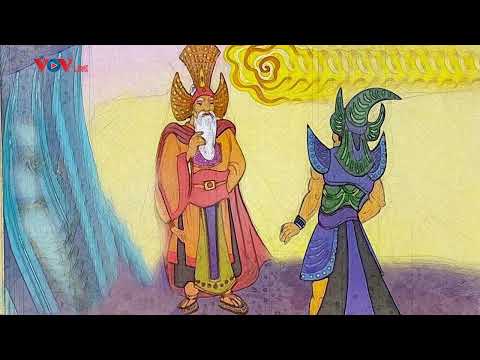
The worship of Tan Vien traces its roots to the mists of Vietnamese prehistory, when ancient Viet tribes first gazed upon the imposing silhouette of Ba Vi Mountain and recognized it as the dwelling place of powerful spirits. According to legend, Saint Tan Vien was once a mortal hero named Sơn Tinh (Mountain Spirit), who won the hand of Princess Mỵ Nương in a divine contest against Thủy Tinh (Water Spirit) during the reign of the legendary King Hùng Vương.
The tale speaks of an eternal struggle between mountain and sea, with Tan Vien representing the steadfast, protective force of the earth against the destructive floods brought by his rival. When Thủy Tinh sends storms and rising waters each year, Tan Vien stands firm, shielding the people of the Red River Delta behind his mountainous fortress. This mythological foundation explains why Vietnamese farmers have turned to Tan Vien for protection against natural disasters for over a millennium.
Historical records from the Lý Dynasty (1009-1225) officially recognized Tan Vien's spiritual authority, with royal decrees acknowledging his role as protector of the realm. Successive dynasties continued this tradition, with the Trần, Lê, and Nguyễn courts all paying homage to the mountain god through elaborate ceremonies and temple construction.
Sacred Rituals of Mountain and Valley
The worship of Tan Vien manifests through a rich ceremonial tradition that varies according to the lunar calendar, with the most significant observances occurring during the Tản Viên Festival from the 15th to the 20th day of the second lunar month. These rituals represent a sophisticated blend of individual devotion and community celebration.
Festival Ceremonies follow a prescribed order that has remained largely unchanged for centuries:
- Lễ Khai Ấn (Seal Opening Ceremony): Temple keepers ceremonially open the sacred seal, marking the official beginning of the festival period
- Lễ Rước Kiệu (Palanquin Procession): Elaborately decorated palanquins carrying the deity's image wind through mountain paths and village streets
- Lễ Cúng Chính (Main Offering Ceremony): The central ritual featuring cơm âm phủ (underworld rice), roasted pig, sticky rice, and traditional cakes
- Lễ Hạ Điền (Field Blessing): Farmers bring soil and seeds from their fields to receive the mountain god's blessing for abundant harvests
The ritual implements used in Tan Vien worship carry deep symbolic meaning. Hương (incense sticks) create the spiritual bridge between earthly and divine realms, while bánh chưng and bánh tét (traditional rice cakes) represent the agricultural bounty under the mountain god's protection. Devotees often bring vàng mã (votive paper offerings) depicting houses, clothing, and money to ensure the deity's comfort in the spiritual realm.
Prayer practices involve specific invocations known as kinh Tản Viên, chanted in classical Vietnamese with Sanskrit Buddhist influences. Pilgrims typically perform tam bái cửu khấu (three bows, nine prostrations) while reciting requests for family health, business prosperity, and protection from natural disasters.
Guardian of Harvest and Home
The spiritual significance of Tan Vien worship extends far beyond individual prayer requests, embodying fundamental Vietnamese concepts of cosmic harmony and social order. As the Thần Núi (Mountain God), Tan Vien represents the masculine principle of stability and protection in Vietnamese cosmology, balancing the feminine water elements that can bring both life and destruction.
For farming communities throughout northern Vietnam, Tan Vien serves as the ultimate Thần Nông (Agricultural Deity), controlling the mountain watersheds that feed the intricate irrigation systems of the Red River Delta. His benevolence ensures timely rains for planting and dry weather for harvesting, making his worship essential to the agricultural calendar that still governs rural Vietnamese life.
The mountain god also functions as a Thần Thổ Địa (Territorial Spirit), protecting specific geographic regions and their inhabitants. Villages throughout Hanoi, Hà Tây, and surrounding provinces maintain their own Tan Vien shrines, creating a network of spiritual protection that reinforces community identity and mutual responsibility.
Beyond material concerns, Tan Vien worship reinforces core Vietnamese values of hiếu (filial piety) and lòng biết ơn (gratitude). Pilgrims often climb Ba Vi Mountain to pray for elderly parents' health or to thank the deity for family blessings, strengthening intergenerational bonds through shared spiritual practice.
Pilgrimage to the Sacred Summit
Ba Vi National Park and Tan Vien Temple Complex
The primary destination for Tan Vien devotees lies within Ba Vi National Park, approximately 60 kilometers west of Hanoi. The Đền Thượng (Upper Temple) crowns the mountain's highest peak at 1,296 meters, requiring a challenging but spiritually rewarding climb through ancient forests and stone steps carved by countless pilgrims.
The temple complex consists of three main structures:
- Đền Hạ (Lower Temple): Located at the mountain's base, serving as the starting point for pilgrimages
- Đền Trung (Middle Temple): Positioned halfway up the mountain, offering rest and intermediate prayers
- Đền Thượng (Upper Temple): The most sacred site, housing the main altar to Saint Tan Vien
When to Visit
The optimal time for experiencing Tan Vien worship is during the annual festival (15th-20th day of the second lunar month, typically March-April), when the mountain comes alive with thousands of pilgrims, traditional performances, and elaborate ceremonies. However, the temples welcome visitors year-round, with particularly peaceful atmospheres during weekday mornings.
Early morning visits (5:00-7:00 AM) offer the most authentic spiritual experience, as serious devotees traditionally climb the mountain before dawn to greet the sunrise from the sacred peak. The mountain's frequent mists create an otherworldly atmosphere that enhances the sense of divine presence.
Practical Considerations
- Physical preparation: The climb to the upper temple requires moderate fitness and takes 2-3 hours
- Appropriate dress: Modest, comfortable clothing suitable for both hiking and temple visits
- Offerings: Purchase traditional items like incense, flowers, and fruit at the base temple
- Transportation: Regular buses from Hanoi to Ba Vi town, followed by motorbike taxi to the park entrance
The enduring appeal of Tan Vien worship lies in its ability to connect modern Vietnamese with their ancestral landscape, offering both spiritual solace and cultural continuity in an rapidly changing world. Whether seeking divine intervention or simply experiencing Vietnam's living religious heritage, pilgrims to Ba Vi Mountain discover that some sacred traditions transcend the boundaries of time itself.
Featured Video
Tục thờ “Tản viên sơn Thánh”
Heritage Details
Official Recognition Information
- Official Name (Vietnamese)
- Tục thờ Tản Viên Sơn Thánh
- Description
- In the heart of Vietnam, the Tan Vien Mountain God Worship Custom celebrates the spiritual connection between the local people and the revered mountain, honoring the divine essence that permeates this ancient and culturally rich landscape.