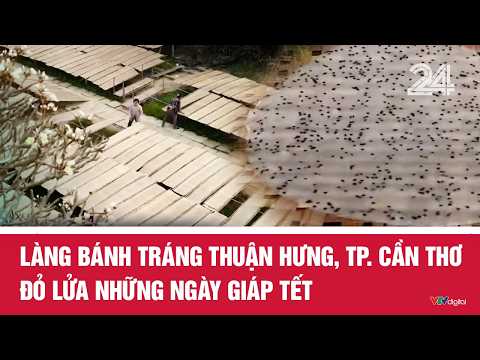
Thuan Hung Rice Paper Craft
In the misty dawn of Dong Thap province, delicate sheets of translucent rice paper flutter like morning prayers on bamboo frames. The rhythmic splash of batter meeting hot metal mingles with the gentle hum of generations-old songs, as skilled hands transform humble grains into edible silk that has graced Vietnamese tables for centuries.
In the heart of the Mekong Delta, the ancient village of Thuan Hung guards one of Vietnam's most delicate culinary treasures: the art of bánh tráng (rice paper) making. This gossamer-thin creation, essential to countless Vietnamese dishes from fresh spring rolls to crispy bánh xèo, represents far more than mere food preparation—it embodies the patient wisdom of delta communities who learned to transform the region's abundant rice into sheets of edible artistry.
Whispers from the Mekong's Heart
The story of Thuan Hung's rice paper craft flows like the mighty Mekong itself, meandering through centuries of agricultural innovation and cultural adaptation. Legend speaks of resourceful farmers during the Nguyen Dynasty who, faced with surplus rice harvests and the need for food preservation, discovered that rice could be transformed into these durable, versatile sheets.
What began as practical necessity evolved into an art form passed down through generations of delta families. The craft flourished particularly during the French colonial period, when improved transportation networks allowed Thuan Hung's superior rice paper to reach markets throughout southern Vietnam. Unlike mass-produced alternatives, the village's handmade bánh tráng earned recognition for its perfect balance of flexibility and strength—qualities that could only be achieved through traditional methods refined over generations.
The Poetry of Paper and Steam
The creation of authentic Thuan Hung rice paper unfolds like a carefully choreographed dance, where timing, temperature, and intuition converge to create edible perfection. Master craftsmen begin their work before dawn, when the delta air carries the perfect humidity for paper-making.
The process begins with gạo tẻ (plain rice), carefully selected and soaked overnight until the grains achieve optimal softness. This rice is then ground with traditional stone mills, creating a smooth, pearl-white batter that forms the foundation of every sheet. The consistency must be precise—too thick and the paper becomes heavy and opaque; too thin and it tears like morning mist.
The heart of the operation lies in the chảo gang (cast iron pans), seasoned through decades of use until their surfaces achieve mirror-like smoothness. These pans, heated over wood fires to exact temperatures known only through experience, receive thin layers of batter spread with lightning-quick movements using bamboo spreaders.
Key elements of the traditional process include:
- Temperature mastery: Each pan must maintain consistent heat without hot spots
- Timing precision: Papers cook for exactly 30-45 seconds before removal
- Weather awareness: Humidity and wind affect drying times and texture
- Rhythmic workflow: Experienced makers can produce up to 1,000 sheets daily
As each sheet cooks, it transforms from opaque white to translucent perfection, its edges naturally curling to signal readiness. The finished papers are carefully peeled and arranged on bamboo mats, where they dry under the gentle delta sun, developing the characteristic flexibility that makes them perfect for wrapping fresh herbs and vegetables.
Threads in Vietnam's Culinary Tapestry
Beyond its practical applications, Thuan Hung rice paper weaves itself into the spiritual and social fabric of Vietnamese culture. In traditional households, the preparation of dishes using bánh tráng becomes a communal activity that strengthens family bonds and passes cultural knowledge between generations.
The rice paper serves as more than an ingredient—it represents the Vietnamese philosophy of balance and harmony. Its neutral flavor allows the fresh herbs, vegetables, and proteins it embraces to shine, while its texture provides the perfect contrast between soft and crisp. During Tết (Lunar New Year) celebrations, families gather to roll spring rolls together, each sheet of rice paper becoming a vessel for hopes, stories, and shared memories.
The craft also embodies the delta's relationship with nature's rhythms. Makers work in harmony with seasonal changes, adjusting their techniques based on humidity, temperature, and rice quality. This deep connection to natural cycles reflects the broader Vietnamese understanding of living in balance with the environment rather than attempting to dominate it.
A Journey to the Source
Thuan Hung Village Experience
Visitors to Thuan Hung village in Dong Thap province can witness this ancient craft firsthand, though timing and respect for local customs are essential. The best visits occur during the early morning hours (5:00-8:00 AM) when production is at its peak and the atmospheric conditions create the most dramatic scenes.
The village welcomes respectful tourists who wish to observe the process, and many families offer hands-on experiences where visitors can try their hand at spreading batter and peeling finished papers. These interactions provide intimate glimpses into delta life while supporting the continuation of traditional crafts.
Planning Your Visit
Best time to visit: Dry season (November-April) offers the most consistent production schedules and comfortable viewing conditions. During rainy season, production may be limited due to humidity challenges.
What to expect:
- Authentic working environment with minimal tourist infrastructure
- Opportunities to purchase fresh rice paper directly from makers
- Possible language barriers (basic Vietnamese phrases appreciated)
- Early morning start times essential for full experience
Nearby attractions: Combine your visit with exploration of Dong Thap's floating markets, lotus fields, and traditional delta architecture to create a comprehensive cultural immersion.
The journey to Thuan Hung rice paper craft reveals Vietnam's genius for transforming simple ingredients into cultural treasures. In watching skilled hands create these edible silks, visitors witness not just food production, but the preservation of knowledge, community bonds, and artistic expression that have sustained delta communities for generations.
Featured Video
Làng bánh tráng Thuận Hưng, TP. Cần Thơ đỏ lửa những ngày giáp Tết | VTV24
Heritage Details
Official Recognition Information
- Official Name (Vietnamese)
- Nghề làm bánh tráng Thuận Hưng
- Description
- Discover the timeless artistry of Thuan Hung Rice Paper Craft, a captivating Vietnamese cultural heritage rooted in Quang Nam Province, where skilled artisans preserve the delicate art of handcrafting this iconic culinary staple.