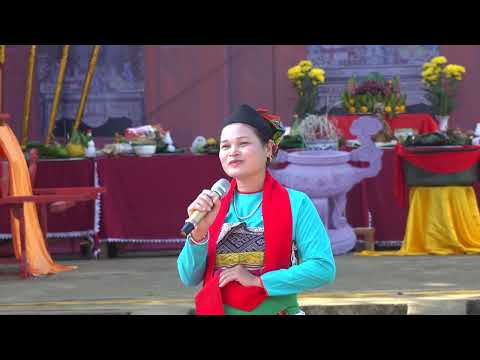
Xuong Love Duet of the Muong
In the misty mountains of northern Vietnam, where ancient forests whisper secrets and streams carry melodies downstream, two voices rise and fall in perfect harmony. The haunting notes of the xuong echo through valleys where the Muong people have sung their hearts for centuries, weaving tales of love, longing, and the eternal dance between souls seeking connection.
The Xuong Love Duet represents one of Vietnam's most enchanting musical traditions, where young Muong men and women engage in melodic conversations that transcend ordinary speech. This ancient form of courtship singing transforms the act of falling in love into a sophisticated art form, where poetry, melody, and emotion intertwine to create something far more profound than simple conversation.
Melodies Born from Mountain Mists
The origins of xuong singing stretch back through the mists of time, deeply rooted in the agricultural rhythms and spiritual beliefs of the Muong people. Legend tells of a time when the mountains themselves taught the first singers, when the wind through bamboo groves and the babbling of mountain streams provided the earliest musical education.
Historical accounts suggest that this tradition flourished during the feudal periods when the Muong communities lived in relative isolation in the mountainous regions of Hoa Binh, Son La, and Thanh Hoa provinces. The practice evolved as both entertainment and a crucial social mechanism, allowing young people to express feelings that cultural norms otherwise kept carefully guarded.
Unlike formal performances, xuong emerged organically from daily life—during harvest festivals, market days, and evening gatherings when work was done and hearts were free to wander. The tradition became so integral to Muong culture that mastery of xuong singing was considered essential for any young person hoping to find a suitable partner.
The Art of Musical Courtship
The xuong duet unfolds like a delicate dance of words and melodies, where each participant must demonstrate not only vocal skill but also quick wit, poetic sensibility, and emotional intelligence. The performance typically takes place between a young man and woman, though the audience of family and community members plays a crucial role as witnesses and judges of the artistic merit.
Key Elements of Xuong Performance:
- Call and Response Structure: The male singer, known as trai xuong, initiates with a melodic phrase that poses a question, compliment, or poetic image
- Improvised Lyrics: Singers must create verses spontaneously, drawing from a vast repertoire of traditional metaphors and imagery
- Melodic Patterns: The music follows ancient scales and rhythmic patterns passed down through generations
- Emotional Progression: A successful duet builds from playful banter to deeper expressions of feeling
The gái xuong (female singer) responds with her own melodic answer, often clever and sometimes playfully challenging. The exchange continues, building in complexity and emotional depth as the singers gauge each other's intelligence, creativity, and genuine feeling. Master singers can maintain these musical conversations for hours, creating elaborate verbal tapestries that captivate listeners and reveal the depths of their artistic souls.
The vocal technique itself requires years to master. Singers must learn to project their voices across valleys while maintaining the subtle tonal variations that give meaning to the ancient Muong language. The melody serves not merely as decoration but as an additional layer of communication, conveying emotions that words alone cannot express.
Hearts Speaking Through Ancient Rhythms
Beyond its role in courtship, xuong singing serves as a vital thread in the fabric of Muong social and spiritual life. The tradition reinforces community bonds, preserves cultural knowledge, and provides a sanctioned space for young people to explore emotions and relationships within the protective framework of cultural tradition.
The songs themselves become repositories of collective wisdom, passing down moral lessons, historical memories, and philosophical insights through generations. Elders often speak of xuong as a form of education, where young people learn not only about love and relationships but about their place in the cosmos, their responsibilities to family and community, and the proper ways to express deep emotions.
For the Muong people, xuong represents a connection to ancestral spirits and the natural world. The belief holds that the most beautiful songs arise when singers align themselves with the rhythms of nature and the wisdom of their forebears. This spiritual dimension transforms what might appear to be simple courtship into a sacred act that honors both human love and divine harmony.
The tradition also serves as a form of cultural resistance, maintaining Muong identity and language in the face of modernization and cultural homogenization. In xuong singing, the Muong language lives and breathes, demonstrating its capacity for beauty, complexity, and emotional expression.
Experiencing the Mountain Serenades
Where to Witness Xuong Performances
The most authentic xuong experiences occur in the traditional Muong villages scattered throughout the mountainous provinces of northern Vietnam. Hoa Binh Province offers the most accessible opportunities, particularly in the districts of Da Bac, Mai Chau, and Luong Son, where Muong communities maintain strong cultural traditions.
Mai Chau Valley stands out as an exceptional destination for cultural travelers. Here, several villages offer homestay experiences where visitors can witness evening xuong performances in their natural setting. The valley's stunning landscape of rice terraces and traditional nha san (stilt houses) provides the perfect backdrop for these musical encounters.
Best Times to Visit
The most spectacular xuong performances occur during traditional festivals, particularly:
- Tet Nguyen Dan (Lunar New Year): When communities gather for extended celebrations
- Mid-Autumn Festival: A time of courtship and romantic expression
- Harvest Season (September-November): When successful crops create a mood of celebration and thanksgiving
What to Expect
Visitors should approach xuong performances with patience and respect. These are not staged shows but genuine cultural expressions that unfold according to their own rhythms. The experience often begins after dinner, as families gather in the main room of traditional houses. The singing may start spontaneously when young people feel moved to express themselves, or elders may encourage performances to honor guests.
The atmosphere is intimate and participatory. While visitors cannot join the singing without years of training, their presence as appreciative witnesses becomes part of the performance's meaning. The evening may include explanations of the songs' meanings, stories about famous singers from the past, and demonstrations of other traditional arts like dan tinh (two-stringed guitar) playing that often accompanies xuong performances.
Featured Video
Xường Mường (Xường giao duyên)
Heritage Details
Official Recognition Information
- Official Name (Vietnamese)
- Xường giao duyên của người Mường
- Description
- The Xuong Love Duet of the Muong people, a captivating musical tradition originating from the lush landscapes of Vietnam, embodies the profound connection between nature, love, and the enduring cultural heritage of this vibrant region.