Xoan Singing in Phú Thọ
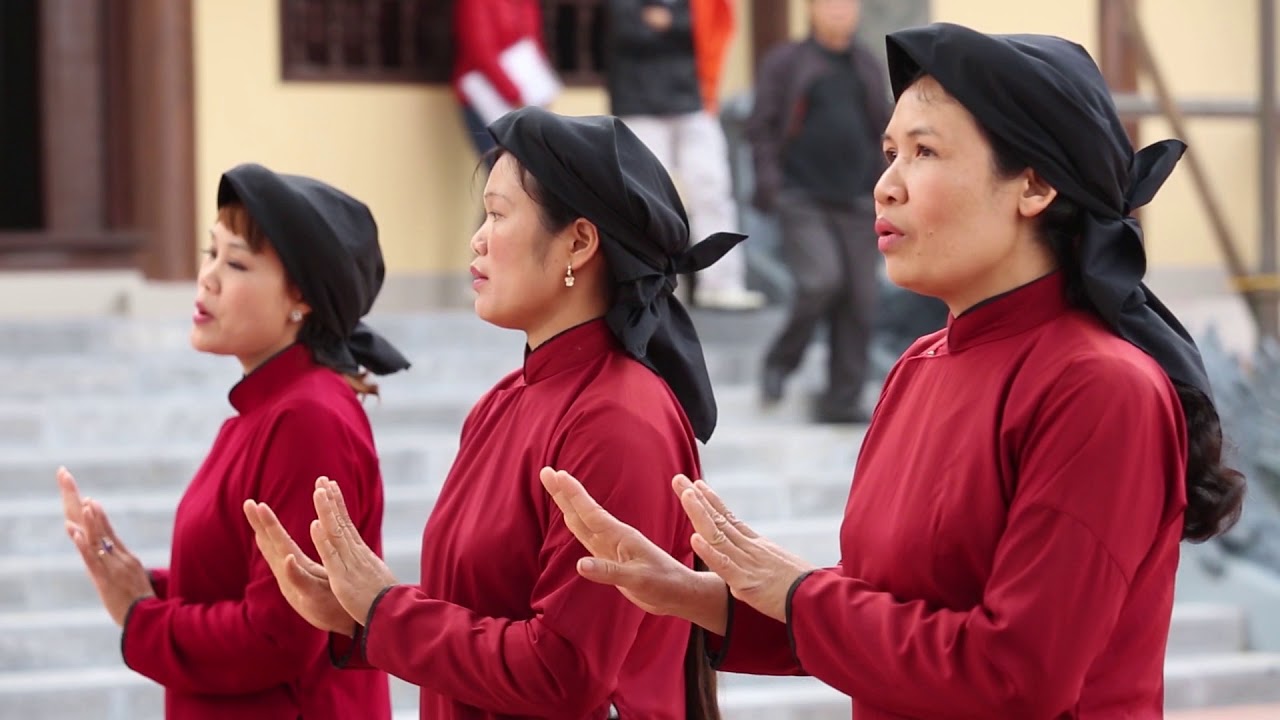
Xoan Singing in Phú Thọ
Introduction
Hát Xoan — Vietnam’s oldest surviving folk song tradition — is alive and accessible to visitors in Phú Thọ Province, just 80–90 km northwest of Hanoi. After a dramatic rescue from near-extinction, this UNESCO-recognised art form now thrives across 37 singing clubs with more than 1,600 practitioners, and a dedicated tourism program called “Hát Xoan Làng Cổ” (Xoan Singing in Ancient Villages) has been welcoming domestic and international tourists since 2013.
Performances take place at centuries-old communal houses, the legendary birthplace temple of Xoan, and the Hùng Kings Temple complex — the spiritual centre of Vietnamese civilisation. The best time to experience Xoan is during the annual Hùng Kings Temple Festival in the 3rd lunar month, though year-round visits can be arranged through Phú Thọ’s provincial tourism centre.
Where to Hear Xoan: The Ancestral Venues Still Singing
The heart of Xoan singing lies in four ancestral villages — An Thái, Phù Đức, Kim Đới, and Thét — all clustered around Kim Đức commune and Phương Lâu ward in Việt Trì City, within 10 km of the Hùng Kings Temple. Each village maintains its own guild (phường Xoan) and home venue, and each is now accessible to visitors through organized cultural tourism programs.
Đình Hùng Lô has emerged as the primary tourist venue for Xoan experiences. This 300-year-old communal house sits on the banks of the Lô River in Hùng Lô village, roughly 10 km west of the Hùng Kings Temple. It functions as a living cultural museum, housing 17th-century palanquins, ancient worship objects, and wood panels with parallel sentences from the Later Lê dynasty. The An Thái guild performs here regularly for tour groups, and visitors can watch full performances, speak directly with artisans, and even learn basic Xoan songs and clapper rhythms. The venue hosts tens of thousands of visitors annually, including international delegations from France, Japan, South Korea, and the United States.
- Google Maps: Đình Hùng Lô
Miếu Lãi Lèn (Lãi Lèn Temple) in Kim Đức commune holds special significance as the legendary birthplace of Xoan singing itself. This is the home venue of the Phù Đức guild. Performances here during the Hùng Kings Festival carry a ritual intensity absent from tourist-oriented shows. During the 2025 festival, performances ran April 1–7 at this temple and several other ancestral communal houses.
- Google Maps: Miếu Lãi Lèn
The four guild home venues — Đình An Thái, Đình Thét, Đình Kim Đới, and Miếu Lãi Lèn — all host performances during the Lunar New Year period following a centuries-old rotation: the 1st day of Tết at Đình An Thái, 2nd at Đình Kim Đới, 3rd at Miếu Lãi Lèn (Phù Đức), 4th at Đình Thét, and 5th at Đền Hùng itself. Additional venues include Công viên Văn Lang (Văn Lang Park) in central Việt Trì, which hosts outdoor Xoan performances by school clubs during festival periods, and the Tourist Welcome Center at the Hùng Kings Temple complex, where art performances including Xoan and water puppetry are staged.
- Google Maps: Hùng Kings Temple Complex
When to Go and How Performances Are Scheduled
Xoan singing was traditionally confined to the first two months of the lunar new year — a spring ritual cycle tied to agricultural prayers and ancestor worship. Today, performances extend year-round, though the experience varies dramatically by season.
The Hùng Kings Temple Festival (Giỗ Tổ Hùng Vương) is the premier occasion. The festival runs from the 8th to the 11th day of the 3rd lunar month, with the main commemoration on the 10th day — a national public holiday. In 2026, this falls on April 26 (Sunday), with the public holiday observed on Monday, April 27. The broader Culture and Tourism Week typically begins a week earlier with roughly 30 activities: Xoan performances at multiple ancestral communal houses, a Hùng Temple Night Tour (7:00–9:00 PM, visitors climb hundreds of stone steps by bamboo lantern light), street music programs, marathon events, craft competitions, and trade fairs. The 2025 festival drew over 32,000 visitors in its opening weekend alone.
Outside the major festival, the “Hát Xoan Làng Cổ” tourism program operates as the primary vehicle for tourist access. Launched by the Phú Thọ Department of Culture, Sports, and Tourism in 2013 and formally structured as a tourism product in 2018, the program connects the Hùng Kings Temple, Hùng Vương Museum, Đình Hùng Lô, the ancient village of Hùng Lô, and Miếu Lãi Lèn into a single-day itinerary. Group tours can be arranged through the Phú Thọ Tourism Information and Promotion Center (Trung tâm Thông tin Xúc tiến Du lịch Phú Thọ) year-round, though availability is highest during spring and autumn. The guilds themselves practice twice weekly, and the 25 satellite clubs under the An Thái guild alone meet twice monthly.
Upcoming Hùng Kings Festival dates (10th day of the 3rd lunar month): April 7, 2025 • April 26, 2026 • April 16, 2027.
No standardized ticket prices have been published for Xoan performances specifically. The “Hát Xoan Làng Cổ” experience is generally packaged within organized day tours. The provincial tourism center offers packages with 10–30% discounts during stimulus campaigns. Artisans like Nguyễn Thị Lịch teach Xoan free of charge to local children, and performances at communal houses during festivals appear to be free to attend. The Hùng Kings Temple complex itself does not charge a general admission fee, though the museum and special programs may have nominal costs.
The four guilds and the masters keeping Xoan alive
The survival of Xoan singing rests on four hereditary guilds, each a tight-knit performance family with defined roles, repertoire, and ritual territory. All four are active today, a remarkable fact given that only seven elderly artisans could perform the full Xoan repertoire in 2011.
Phường An Thái is the largest and most prominent guild, led by Nguyễn Thị Lịch (born 1950), the only female trùm (guild leader) in Xoan history and a fifth-generation Xoan practitioner. Now in her mid-70s, she holds Vietnam’s highest artisan title — Nghệ nhân Nhân dân (People’s Artist) — and has trained over 100 classes since 2012, expanding her guild to 107 members across five generations (ages 6 to 94) and spawning 25 satellite clubs across the province. She is the only đào (female singer) who has mastered all Xoan drum pieces. Her daughter-in-law Bùi Thị Hà continues as an active practitioner.
Phường Phù Đức, based at Miếu Lãi Lèn, is led by Lê Xuân Ngũ (born circa 1941), now approximately 85 years old and the longest-serving trùm, having held the position since 1979. Awarded the People’s Artist title in 2019, his father also served as trùm before him. Though his mobility has declined, his memory remains sharp, and he has trained roughly 200 students.
Phường Thét is led by Bùi Thị Kiều Nga, who holds the Meritorious Artist title (Nghệ nhân Ưu tú) and took over as trùm in 2015. Originally from An Thái village, she married into Kim Đức and has spent 24 years practicing Xoan. A YouTube project by researcher Nguyễn Quang Long recorded the first complete set of all 13 Quả Cách songs and 3 worship songs at her home in 2023–2024.
Phường Kim Đới is led by Nguyễn Văn Quyết, the youngest trùm in Xoan history, having assumed leadership at age 25. He has trained approximately 600 students since 2009 and is being proposed for the Meritorious Artist title.
Across the province, 37 clubs with over 1,600 members now practice Xoan — a 23-fold increase from the roughly 70 practitioners who remained before the UNESCO inscription. The provincial government has recognized 52 provincial-level artisans and 17 national Meritorious Artists, with financial support flowing to both the original guilds and their satellite organizations.
What a Xoan performance looks and sounds like
A traditional Xoan performance unfolds in three precisely sequenced stages inside a communal house (đình), before the altar of the village guardian spirit. The full cycle encompasses at least 24 sections and can last an entire evening. Tourist-oriented performances present condensed highlights from all three stages with bilingual commentary.
Stage one — Hát Nghi Lễ (Ritual Songs) opens the ceremony with four solemn pieces performed directly before the altar. The sequence begins with Nhập tịch mời Vua (Inviting the Kings), a chant summoning the spirits of the Hùng Kings to join the festival. This is followed by Giáo trống (Drum Presentation), performed by a young kép (male musician, typically 15–16 years old) who wears a small drum strapped to his chest and sings while playing and dancing. Next comes Giáo pháo (Firecracker Presentation) in a similar format, then Thơ nhang (Incense Poetry), performed by four đào (female singers) standing in line with open fans, their gestures mimicking incense offerings. The ritual section closes with Đóng đám. The mood is reverent, the rhythm spare — more chanted recitation than melody.
Stage two — Hát Quả Cách (Formal Songs) is the artistic core, comprising 14 distinct songs with rich poetic content. Each quả cách follows a three-part internal structure: an introduction sung by a soloist (giáo cách), a body performed by a male vocalist and female ensemble with dances (đưa cách), and a female-sung conclusion (kết cách). The 14 songs traverse the full year’s seasons — Xuân Thời (Spring), Hạ Thời (Summer), Thu Thời (Autumn), Đông Thời (Winter) — alongside depictions of rural life: Ngư Tiều Canh Mục (Fisherman, Woodcutter, Farmer, Herder), Thuyền Chèo (Boat Rowing), and historical tales like Kiều Giang (Princess Kiều Giang). Between each quả cách, transitional refrains connect the pieces. The kép leads all singing in this section while beating a small drum; the đào echo phrases, harmonize, and perform illustrative dances — hands extending and drawing in, palms turning, miming spinning thread, rowing boats, casting nets.
Stage three — Hát Hội (Festival Songs) is the most electrifying section, breaking the fourth wall entirely. This is interactive courtship singing between the guild’s đào and young men from the host village. Key pieces include Bỏ bộ (a flirtatious dance-song), Xin huê / Đố huê (flower riddles), Đố chữ (character riddles), and the climactic Mó cá (Groping for Fish), where women form a circle as a “net” and catch a male “fish” — a vivid fertility symbol. The singing is call-and-response, improvisational, and competitive. Visitors at tourist performances are sometimes invited to participate in simplified versions of these interactive songs.
The instruments are strikingly minimal: a small drum (trống con or trống đế, about 20 cm in diameter, made of jackfruit wood), a large drum (trống cái) for transitions, and two to three pairs of bamboo clappers (phách). No string or wind instruments are used — only percussion and voice. This austerity gives Xoan its distinctive ancient texture. Three signature refrains — “tầm vông,” “tềnh tang,” and “lãi lèn” — punctuate the singing, with lãi lèn considered the soul of the tradition.
Costumes reinforce the visual ceremony. Male performers wear black turbans, black silk robes, white trousers, and red silk scarves, with the small drum strapped to the belly. Female performers dress in five-panel traditional dresses (áo năm thân), crow-beak headscarves (khăn mỏ quạ), white blouses, red bodices (yếm điều), colored waist sashes, silk trousers, and silver chain ornaments.
From near-death to UNESCO showcase: the safeguarding story
The UNESCO trajectory of Hát Xoan is itself a remarkable narrative — and one that directly shapes what tourists experience today. When inscribed on the List of Intangible Cultural Heritage in Need of Urgent Safeguarding on November 24, 2011 (at the 6th session in Bali), only about 7 elderly artisans could perform the complete repertoire, roughly 100 practitioners remained, and their average age exceeded 60. The tradition had effectively stopped being performed in communal houses after 1945.
Vietnam responded with a 165 billion VND (~$7.85 million) safeguarding project spanning 2013–2020, later extended through 2025. The measures were comprehensive: 14 intensive training classes for original guild singers, integration of Xoan into the school curriculum with 100% of music teachers in Phú Thọ trained in Xoan instruction, restoration of 19 relic sites associated with Xoan performances, documentation of 31 ancient songs by the Vietnamese Institute of Musicology, and formal recognition of 71 distinguished artisans.
The results were dramatic enough to make history. On December 8, 2017, at the 12th session of the Intergovernmental Committee in Jeju, South Korea, Hát Xoan became the first element ever transferred from the Urgent Safeguarding list to the Representative List of the Intangible Cultural Heritage of Humanity — an unprecedented action that required all 24 committee states to vote unanimously in favor. UNESCO’s representative in Hanoi, Michael Croft, called the achievement “a wonderful story worthy of its own song” when presenting the certificate at Miếu Lãi Lèn on February 3, 2018.
This safeguarding success is precisely what enables the tourist experience today. The communal houses were restored as both worship sites and performance venues. The training programs created a critical mass of performers capable of staging regular shows. The school integration means young performers are constantly entering the pipeline. And the UNESCO recognition itself generates international awareness that draws visitors. Phú Thọ is now the only locality in Vietnam with two UNESCO intangible cultural heritage recognitions: Xoan Singing and the Worship of Hùng Kings (inscribed 2012).
How to Get There and Plan Your Visit
Phú Thọ Province lies 80–90 km northwest of Hanoi, making it an easy day trip or overnight excursion. Việt Trì City, the provincial capital and base for all Xoan venues, is the primary destination.
The most convenient option is a bus from Mỹ Đình Bus Station in Hanoi, with departures roughly every 15 minutes, a travel time of 1.5–2.5 hours, and fares of approximately 60,000–150,000 VND ($3–7). Trains depart from Hanoi Railway Station to Việt Trì on the Hanoi–Lào Cai line, taking about 2.5 hours at 50,000–350,000 VND ($2–14) depending on class, though schedules are limited to one or two departures daily. By private car or motorbike via the Nội Bài–Lào Cai Expressway or National Highway 32C, the drive takes under two hours. From Nội Bài Airport, Việt Trì is roughly 60 km, reachable in 1.5–2 hours by taxi.
The Phú Thọ Tourism Information and Promotion Center coordinates organized tours. A structured day tour typically follows this itinerary: 6:00 AM pickup from Hanoi → Hùng Kings Temple complex (incense offerings, temple visits) → Hùng Vương Museum → lunch at a local restaurant → Đình Hùng Lô for Xoan singing performance and village exploration → return to Hanoi by evening. Multi-day packages extend to the Long Cốc tea hills, Xuân Sơn National Park, Wyndham Lynn Times Thanh Thủy hot springs, and the 1,300-year-old Tam Giang Temple. Local tour operator phutho-tours.com offers bookable day tours, and the MyPhuTho.vn smart tourism app provides digital maps, QR-coded destination information, and online booking.
- Website: Phú Thọ Tourism
- App: MyPhuTho.vn
- Contact: +84 210 3852 888 (Phú Thọ Tourism Promotion Center)
Accommodation in Việt Trì ranges from 300,000 VND/night ($12) for budget hotels to 2.5–3.5 million VND ($100–140) for upscale options. Local specialties worth sampling include sour fermented pork (nem chua), five-colored sticky rice, cassava pancakes (bánh sắn), and palm fruit.
The Hùng Vương Museum, located within the temple complex on Nghĩa Lĩnh Mountain, is essential context for understanding Xoan. Its 9,000 m² of exhibition space houses nearly 700 original artifacts spanning four key archaeological cultures (Phùng Nguyên, Đồng Đậu, Gò Mun, Đông Sơn), plus a thematic exhibition on “Hùng Vương Culture in the Flow of Red River Civilization” featuring 300+ artifacts and documentation on Xoan singing. A new 22-minute 3D documentary, “Hùng Vương Era,” was piloted in April 2025. The museum welcomed over 12,000 visitors in early 2025 alone.
Beyond the Main Festival: Year-Round Xoan Events and New Programs
Several programs now extend Xoan experiences well beyond the Hùng Kings Festival window.
The annual Phú Thọ Xoan and Folk Song Festival (Liên hoan Hát Xoan và Dân ca Phú Thọ) brings together clubs from across the province for a competitive showcase. The 2024 edition featured approximately 400 artists from 17 clubs performing 60 pieces, including not only Xoan but regional folk forms like Chèo, Chầu Văn, and Quan Họ. A large-scale arts event called “Hội Xoan 2024 – Miền Di sản” (Heritage Region) staged roughly 300 artists at the Hùng Kings Temple complex, incorporating fashion shows inspired by Xoan aesthetics.
The Hùng Temple Night Tour, themed “Sacred Origin” (Linh thiêng nguồn cội), launched in 2025 and runs 7:00–9:00 PM, guiding visitors by bamboo lantern through the Hạ, Trung, Thượng, and Giếng temples. Xoan singing serves as a cultural highlight of this atmospheric evening experience. An educational tourism program announced in December 2025 positions Xoan as a “living classroom,” with school groups visiting Hùng Lô Ancient Village and Miếu Lãi Lèn for interactive singing sessions, bánh chưng making, and folk games.
In December 2025, a five-day intensive training course for 45 trainees from the Lạc Hồng Theater, cultural centers, and museums was conducted by People’s Artists and Meritorious Artists, covering the history, singing, dancing, and drumming across all three Xoan stages. The province is also developing a planned “Hát Xoan Phú Thọ – World Heritage” digital platform incorporating virtual reality and AI to create immersive remote Xoan experiences, though this has not yet launched.
Phú Thọ’s tourism has grown explosively — 14.5 million visitors estimated for 2025, with tourism revenue reaching nearly 14,800 billion VND (~$562 million), the highest ever. Following a July 2025 merger with Vĩnh Phúc and Hòa Bình provinces, the combined territory now offers visitors a seamless circuit from morning pilgrimage at the Hùng Kings Temple and Xoan singing at Đình Hùng Lô, to afternoon cruises on Hòa Bình Lake, to evening resorts at Tam Đảo or hot springs at Thanh Thủy.
Conclusion: a tradition reborn, now waiting for visitors
Hát Xoan represents something rare in cultural tourism — a tradition that genuinely nearly died and was genuinely saved, not a commodified performance staged for cameras. The fact that the same guilds singing in the same communal houses trace their lineage back centuries gives the experience an authenticity difficult to replicate. The infrastructure is still developing; English-language signage remains limited, and independent foreign travelers are uncommon enough that one backpacker described the province as a place where “you can see real Vietnam without tourist madness.”
For visitors, the practical takeaway is clear: combine a Xoan experience with the Hùng Kings Festival in late April 2026 for maximum cultural immersion, or arrange a quieter off-season visit through the provincial tourism center for a more intimate encounter with artisans. The “Hát Xoan Làng Cổ” program at Đình Hùng Lô is the most accessible entry point. The night tour at the Hùng Kings Temple adds atmospheric depth. And the knowledge that People’s Artist Nguyễn Thị Lịch — now 75, the woman who kept the flame alive through decades of decline — may still be leading performances at her An Thái guild, makes the journey feel less like tourism and more like witnessing a living inheritance.
Ticket Price: Mostly included in tours; festival communal house performances generally free