
Xoan Singing of Phú Thọ
In the ancient courtyards of Phú Thọ, time suspends as haunting melodies rise from the circle of singers. Their voices—sometimes delicate as morning dew, sometimes resonant as temple bells—carry tales older than the ancient banyan trees that witness their performance. As spring blossoms unfold, so too does this sacred ritual, connecting modern audiences to the dawn of Vietnamese civilization.
Xoan Singing (Hát Xoan) is a distinctive Vietnamese folk art originating in Phú Thọ Province, considered the cradle of Vietnamese civilization. This ceremonial singing tradition dates back to the Hùng Kings era and represents one of Vietnam's most precious living heritages. Recognized by UNESCO as an Intangible Cultural Heritage of Humanity in 2017, Xoan Singing combines vocal performance, dance, and rhythmic drumming to honor ancestors and celebrate spring's renewal.
Melodies from the Land of Ancient Kings
The origins of Xoan Singing intertwine with Vietnam's founding mythology. According to legend, it emerged during the reign of the Hùng Kings (2879-258 BCE) in the ancestral homeland of Phú Thọ. The name "Xoan" itself may derive from "Xuân" (spring) or from "xoan" trees that once filled temple courtyards where performances took place.
Initially, Xoan was performed exclusively as ritual offerings at the Hùng Kings Temple and communal houses dedicated to village guardian spirits. During the Lý Dynasty (11th-13th centuries), the art form evolved as royal patronage expanded its repertoire and formalized its structure. Over centuries, it became both a sacred ritual and a form of spring entertainment, though always maintaining its spiritual core.
Through wars and social upheavals of the 20th century, Xoan Singing faced near-extinction, preserved only by a handful of elderly practitioners in isolated villages. Its UNESCO recognition came at a critical moment, spurring revival efforts that have breathed new life into this ancient tradition.
The Sacred Choreography of Sound and Movement
Xoan performances follow precise artistic protocols passed down through generations:
Repertoire and Structure
Xoan Singing encompasses four main categories:
- Hát Thờ (Worship Singing): The most sacred form, performed only at the Hùng Kings Temple and communal houses
- Hát Qua Xuân (Spring Transition Songs): Celebrates the arrival of spring
- Hát Ghẹo (Teasing Songs): Playful exchanges between male and female singers, often containing romantic themes
- Hát Trò (Drama Songs): Narrative pieces accompanied by theatrical movements
The Performers
A traditional Xoan guild (phường Xoan) consists of:
- A guild master (trùm phường)
- Male and female singers (kép and đào)
- Musicians playing instruments like the clappers (phách), drum (trống), and bamboo castanets (sinh tiền)
Performance Elements
The art form integrates several components:
- Distinctive vocal techniques featuring a unique blend of falsetto, chest voice, and ornamentation
- Simple but symbolic dance movements where performers arrange themselves in circles or parallel lines
- Colorful traditional costumes: women in áo tứ thân (four-panel dress) and men in áo dài khăn xếp (traditional robe with turban)
- Percussion accompaniment that establishes the rhythm and ritual atmosphere
The Living Thread of Community Identity
More than mere entertainment, Xoan Singing embodies the spiritual foundation of northern Vietnamese culture. For local communities, it serves as a sacred thread connecting past, present, and future generations to their ancestral roots.
At its core, Xoan expresses gratitude—to ancestors who founded the nation, to village guardian spirits who ensure prosperity, and to the natural cycles that sustain agricultural life. The lyrics often reflect Confucian values of loyalty, filial piety, and community harmony while simultaneously celebrating the joys of rural life and love.
The guild system of Xoan has traditionally provided social structure, with membership passing through family lines. This system preserved not just artistic techniques but also ritual knowledge and community histories. Today, Xoan guilds represent living archives of cultural memory, their performances acting as communal ceremonies that reinforce local identity.
In recent decades, as Xoan transitions from endangered tradition to revitalized heritage, it also embodies Vietnamese resilience—the ability to preserve cultural essence while adapting to contemporary contexts.
Experiencing the Echoes of Ancient Vietnam
When to Visit
The prime time to witness authentic Xoan performances is during the annual Hùng Kings Festival, held from the 8th to the 11th day of the third lunar month (typically April in the Gregorian calendar). However, various performances are now scheduled throughout spring (February to April).
Key Locations
Hùng Kings Temple Complex
- Located on Nghĩa Lĩnh Mountain in Phú Thọ Province
- The most spiritually significant venue for ceremonial Xoan performances
- Offers regular cultural showcases during the spring season
An Village
- A historic center of Xoan tradition in Việt Trì City
- Home to the oldest existing Xoan guild
- Visitors can arrange performances and even participate in workshops
Kim Đái Village
- Known for preserving the Hát Ghẹo (teasing songs) variation
- Maintains a Xoan guild house open to visitors by appointment
Phú Thọ Provincial Museum
- Houses exhibitions on Xoan history and artifacts
- Occasionally hosts performances and educational programs
Visitor Tips
- Respectful attire is required when attending performances in temples or communal houses
- Photography may be restricted during sacred ritual segments
- Consider hiring a local guide familiar with Xoan traditions for deeper cultural context
- Some guilds offer immersive experiences where visitors can learn basic Xoan techniques
- Many performances now include English introductions for international visitors
By participating as an audience member in a Xoan performance, you're not simply watching entertainment—you're helping sustain one of Vietnam's oldest continuous cultural traditions, one that has echoed through temple courtyards for thousands of years.
Featured Video
Xoan singing of Phú Thọ province, Viet Nam
Heritage Details
Official Recognition Information
- Official Name (Vietnamese)
- Hát Xoan ở Phú Thọ
- Description
- The ancient and enchanting Xoan Singing tradition, rooted in the northern Vietnamese province of Phú Thọ, is a captivating expression of the region's rich cultural heritage and spiritual connection to the land.
🎭 See It Live
Official performance experience for this heritage in Việt Trì City & Hùng Kings Temple area.
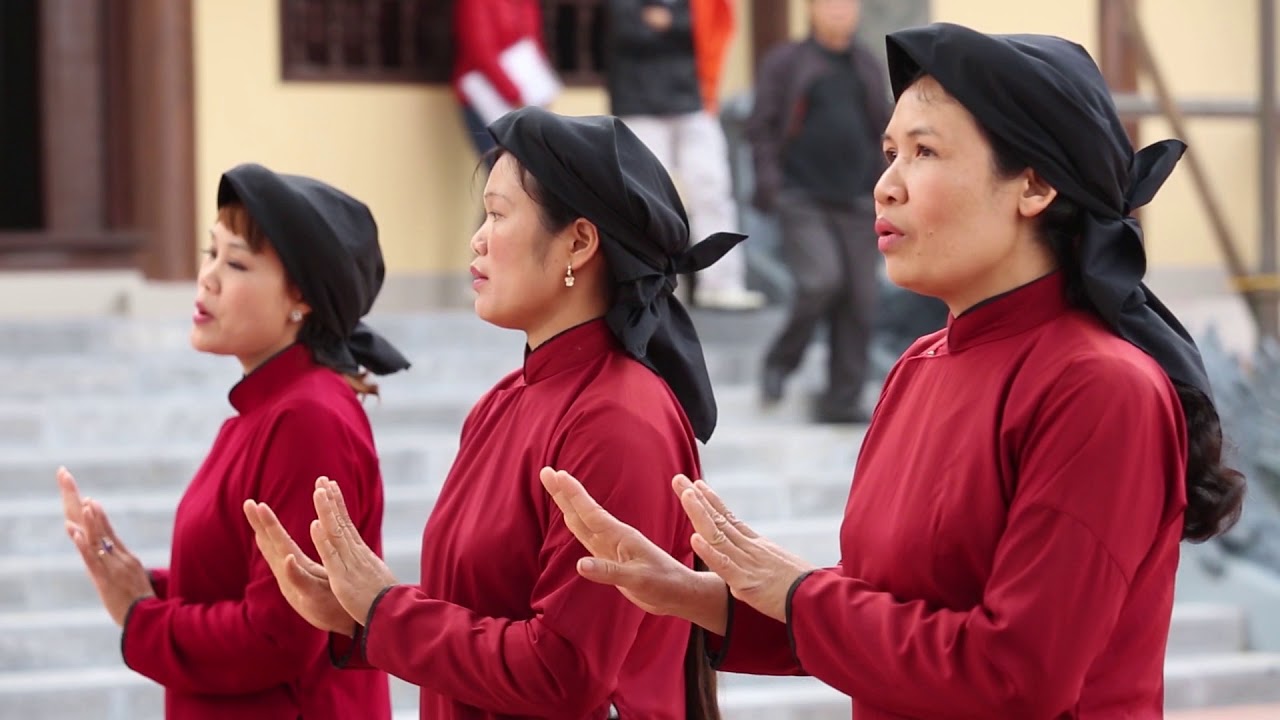
Xoan Singing in Phú Thọ
Experience UNESCO-recognised Xoan singing in Phú Thọ’s ancestral villages and at the Hùng Kings Temple complex, with performances at restored communal houses and ancient temples.